
mhaselden
-
Posts
3,009 -
Joined
-
Last visited
Recent Profile Visitors
8,190 profile views


.thumb.jpg.76f12b87ce9ca9929c9aabdcf8f9d2dd.jpg)

mhaselden's Achievements

Very Obsessed Member (5/9)
1.5k
Reputation
-
Sorry but this statement is factually incorrect. The US taxpayer does not fund any FMS actions. By law, FMS must be cost neutral to the US Government. All admin costs for the programme are covered by additional fees that are paid by the receiving foreign government.
-
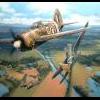
112 Squadron RAF Tomahawk Mk IIb - wires or no wires?
mhaselden replied to Nick McV's topic in Aircraft WWII
Reflector gun sights were fitted at the squadron level. Since the aircraft had to be delivered from the manufacturer with some form of gunsight, they would be fitted with ring-and-bead sights which, on occasion, were retained during operational service. If you're depicting the aircraft in squadron usage, then you'll need to add a reflector gunsight. -
112 Squadron RAF Tomahawk Mk IIb - wires or no wires?
mhaselden replied to Nick McV's topic in Aircraft WWII
And the OP’s image seems to match the configuration for the Tomahawk Mk IIa. -
There’s more to conducting warfare than a string of “firsts”. Doctrine is needed to define how warfare is understood. Yes, I can shoot down an enemy aircraft but making that a large-scale warfighting capability is a vastly different proposition. It’s generally accepted that Douhet produced the first air warfare doctrine in 1921, closely followed by the RAF the following year. However, all those efforts were informed by experience during the Great War. I’d argue that true air warfare was in place in the summer of 1917. By that time, all air power elements that we recognize today were employed: ISR, DCA, OCA, maritime patrol/strike, deep strike, CAS, army co-op, and strategic bombing. It was the combination of these capabilities that drove the formation of the RAF.
-
I'd start with the Matchbox Seafox. It's pretty small and, as others have noted, like other Matchbox biplanes, it's designed to be pretty straightforward to build.
-
Seeking references RAAF reconnaissance operations 1942-1943
mhaselden replied to 28ZComeback's topic in Aircraft WWII
1 PRU RAAF operated 6 ex-Dutch Brewster B339-23 Buffalos, serial nos A51-1 thru A51-6. The camera installation was copied from the RAF 4 PRU modified Buffalos at Singapore. Sqn Ldr Lewis, ex-CO of 4 PRU, supported the conversion effort for 1 PRU after he was evacuated from the Dutch East Indies. Neither the Buffalo nor Lancer were allowed to be used on overwater flights so they really were just used for training. There’s some interesting info on RAAF Buffalos and Lancers of 1 PRU, including timelines and availability of airframes, in the link below: http://www.adf-serials.com.au/2a56.htm -
I agree with the interpretations mentioned above. Bear in mind that tricycle landing gear was unusual at this time. With so few types, it seems plausible that the language hadn’t been standardized. Yes, we talk about main and nose wheels today but, back then, there probably wasn’t a commonly accepted term. it might be interesting to see how the nose wheels was described on contemporaneous tricycle aircraft like the P-39, Albemarle, and even the Catalina.
-
With or without sparkles?
-
Does this help? Source: https://www.destinationsjourney.com/historical-military-photographs/blackburn-skua/ Or these? Source: https://dingeraviation.net/skuaroc/modelling_the_blackburn_skua.htm
-
Mosquito question F/O Hazelhoff Roelfzema 139 Sq
mhaselden replied to Rob K.'s topic in Aircraft WWII
Here’s the serial for one Mossie that he flew, KB434: https://aviation-safety.net/wikibase/186552 No idea if that was Q-Queenie. -
Dutch East Indies Curtiss Wright CW-21B Interceptor (colours)
mhaselden replied to Marcel's topic in Aircraft WWII
IIRC, they were painted aluminum. -
Maybe Airfix is listening? One can only hope.
-
The key information we're missing is when were the Vildebeests first camouflaged? According to the caption for the image below (from Key Aero), this was K4599 'VU-J' seen making a torpedo drop in 1939 (Source: https://www.key.aero/article/36-squadron-raf-unit). The airframe seems to be in overall aluminium dope, presumably with grey cowling and metal areas around the cockpit: If that caption is accurate, and the 1939 note on the image of the high-contrast camouflaged Vildebeest is also correct, then the airframes didn't have much time to fade significantly. It's also interesting that the scheme doesn't appear to have faded much more when the air-to-air photo was taken sometime after May 1940, despite the airframes appearing rather patched and tatty. I found some interesting pics of Vildebeests on a Singapore archives website. Hopefully this link will take folks to the search returns: https://www.nas.gov.sg/archivesonline/photographs/search-result?search-type=basic&item-type=&keywords=vildebeest&keywords-type=all&date-from=&date-to=&sellable-type= That site includes the post-May 1940 air-to-air pic showing the rather tatty airframes and dates it to 13 January 1941: The list has another air-to-air pic of formating 36 Sqn machines dated 24 April 1940. The caption identifies 2 airframes, K4168 ('OE-F') and K4164: There's also this pic of K4160 'OE-C' dated 19 April 1940 in the same scheme: It seems to me that the Vildebeests were camouflaged in the high-contrast scheme in 1939, sometime before 1 August of that year, and that the scheme continued into early 1941. It was then replaced with a low-contrast scheme, probably with Dark Earth/Dark Green uppers, sometime in 1941.
-
Which would tally with the idea of the aircraft being initially camouflaged in 1939 and then being refurbished in 1941. The photographic evidence agrees with your timeline with the high-contrast scheme being applied in 1939 and retained until sometime after May 1940, with the low-contrast scheme sometime prior to the Japanese attack on Malaya and Singapore.
-
I think it would be odd to maintain a one-off (or two-off) test scheme during operations. GIven the efforts made to ensure correct identification of RAF airframes, I can't see any upside to retaining a test scheme...although, in fairness, it would be pretty hard to mistake a Vildebeest for anything except a Vincent. The problem is that we don't have any images showing the low contrast scheme prior to May 1940. Conversely, we have more images of Vildebeests, including the pic of 'OE-R' and pics of captured Vildebeests taken by the Japanese, showing the low-contrast scheme, which suggests it post-dates the high-contrast scheme.