Search the Community
Showing results for tags 'FW 190'.
-
Hello everyone, it's been a while. Does anyone know if I/SG2 had Fw 190F-8s numbered Red (or Blue) 1 and 3? There're two know photos of Red (or Blue) 2 and 9, so I assume the former was the case. Cheers!
-
Another outing for the Zvezda kit: Having shuffled the parts around from one place to another and then another, some of the main UC parts are missing. No problem, as I want to build this wheels up, I have another in the stash with all parts accounted for. I won't be building either of the OOB schemes. My plan is for a I/JG 54 machine in green/brown upper camouflage with temporary winter white disruptive camouflage. First step: Cut out the stand slot, and tweak it to fit an old-style Airfix stand: Next, join the fuselage halves together, remove the lowered tail wheel, and replace it with a spare, probably from Airfix: The tail planes were probably only dry-fitted at this point. Theoretically, this is a snap-together kit, but I won't be taking any chances by not using glue. At this point, I have assembled the wings and added the cockpit "tub". Note the inboard port cannon was broken off at some point, and I have drilled out a replacement hole. More to come soon (promise!)
-
 As part of the recent great FW 190 STGB I modeled my first FW 190s--a 1/72 Revell F-8 and a 1/72 Airfix A-6 which I converted to a F-8. Neither are especially great kits, and by all accounts Eduard's are much better. I used decals from Techmod for the yellow-heavy Hungarian air force markings. I had a lot of fun and did Luftwaffe mottling for the first time--I don't airbrush and in this case I used a Q-tip with very thinned RLM 74 and 75 for the mottle. Anyway, these are certainly not the most perfect FW 190s around here (gosh there are some real BM beauties!), but I really enjoyed building them and the camaraderie of the GB. Here they are, the Revell with wheels down (yellow 54), Airfix wheels up (white 21). WIP is here in case of interest:
 -
I can finally call this build completed. A few problems with the decals being brittle and breaking when sliding them into the model, but everything turned out ok in the end.
-
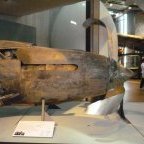 After building Revell's 1:32 Me 262, I thought I'd start on this one. This Fw 190A-3 is the original new tool version that would spawn so many boxings by Hasegawa. The plan is to build it as Black 13 with the Eagle Head on the nose. Decals look great on the sheet. Hopefully they won't breal when placed in warm water. The Eagle Head will also be a test to try my Mr. Mark Softer. Here's a photo of the box.
 -
Hi everyone, I haven't built a Matchbox kit for centuries, and I only have 3 oldies in the stash. For starter I have chosen the kit PK-6 of the FW 190 A-3 or A-4. Here are a few photos to show this plastic from another age. The tasteful plastic: Notice, decals and transparencies: This kit has always been described as one of the best models of the A-3/A-4... in its time. Ergo it is still a good kit and I want to do it justice. Therefore I will jazz up the cockpit, using a Reheat PE seat, pedals and seat belts. Te wheels are very much under par and will be replaced by a True Details set. I plan to finish it as a FW 190 A-2 of JG 26, using decals found in a Kagero booklet about JG 26. The kit's decals are for a FW 190 G, so... It will be fun!!! JR
- 24 replies
-
- 13
-

-
Had Argentina officially sided with the Axis during 1942/43, which aircraft would the FAA had used: Bf 109F-4 or Fw 190A-2 (1942)/Fw 190A-5 (1943). Don't want a political discussion in the comments, just want to know which aircraft could have been used by Argentina.
-
Please can you advise what the correct colour schemes are for decals that come with Matchbox's Fw-190 A3/A4? I doubt very much that they had uniform green topsides which is what the box painting scheme advises. The aircraft are claimed to be III Group JG 51 (red 10+1) and SG 1 (red H). These relate to the original boxing before Matchbox revised the weapon parts. Thanks
-
Eduard's (new tool Fw 190A-8) 1:48 Fw 190A-9
Sturmovik posted a topic in Work in Progress - Aircraft
Here's a preview of my next project, Eduard's Fw 190A-8 that will be transformed into an A-9 from SG 10 by using the 14 bladed cooling fan and the broad bladed propeller. One thing I won't do is to lengthen the cowling 30mm. I guess 30mm IRL must be negligible in a scale model. Here are the decals I'll be using (left, Aeromaster) next to the Eduard ones (right). The version I plan on doing. I like the yellow on this one. -
Hello guys, I have the Aeromaster decal sheet "Reich Defense Part 3" in 1:48, and got interested in the Fw 190A-8 "Yellow 1 and Bars" from JG 11. The painting profile suggests the aircraft was painted in RLM 81/82/76, with a replacement empennage painted in RLM 75/76. However, I found this photo of an aircraft very similar to the one in the sheet. This one looks to be much more different than an A-8 (doesn't seem to have the 13mm machinguns in the nose, and lacks the later 190 landing gear doors). But it does have the blown canopy, characteristic of late-war 190s. Guiding myself with the colour profile of the Eduard Fw 190A-6 for Anton Hackl's aircraft (from JG 11 too), I assumed the empennage of the aircraft I'm interested in is white, with a replacement rudder, and painted in RLM 74/75. This aircraft also has the earlier landing gear doors. Could this one be Frankenplane, with a mix of parts to make one functional 190? Any help in identifying this aircraft will be welcomed! P.S: I intend to build the Eduard new tool 48th 190A-8, and the beginning (and acquisition) of this project depends on the solution to the identification of this plane.
-
Hi there To make a long story short, there's a chance that I produce something in 2020! And please don't ask about 2014 to 2019! It started three weeks ago. Here's the doctor's prescription. A little more than three sprues This one doesn't count! I'll use the stencils only The usual piece of art by Tamiya Colours options... needless to say they didn't suit me!! :
-
This was my last model of 2019, finished right before Christmas. Eduard’s latest 190, the A-8 version, vastly superior to the “old” moulds from 2010 or so, is a pleasure to build and should provide a rewarding experience to all kind of modelers. the model tries to depict Rudy Artner JG.5 plane. It’s my own interpretation from the few B&W photos coupled with some educated guessing. Painted with Mr. Hobby 74/75/76, MRP 04 and Real Colors late 81 for the green stripes. decals came from Sky models and Xtradecals for insignias. Besides the box contents I used Bregun wheels and Aber brass guns and Pitot tube. Hope you enjoy, wishing all a splendid 2020!
- 27 replies
-
- 53
-
-
Not all wingy things but most of them are but here is an overview of my most productive year of modelling in a very looooooooooong time. Some of them have been posted here some not. Overview 2019 From Left to right : Junkers 88 Mistel 1:48, Volkswagen Samba Bus 1;24 , Ki61 Hien 1:48, Fw190 A3 1:48, Austin MkIV armoured car 1:72, F100F 1:72, Hawker Sea Fury 1;48 and last but not least a scratch- built fantasy Sci-fi thingy called the "Commissar of Grievance' And in the close but no cigar category are Mirage F1AZ 1:48 St Chamond tank WWI 1:35 Regards Brian
-
BODENPLATTE Fw 190D-9 & Bf 109G-6/14 1:48 Eduard Limited Edition For this limited edition boxing the kits are focused on German aircraft that participated in the Operation Bodenplatte on January 1, 1945. This was an attempt by the Luftwaffe to gain air superiority over the stalled Ardennes battlefield. The operation achieved surprise and initial success, however it ultimately failed. While many allied aircraft were destroyed on the ground actual aircrew casualties were light and most of the losses of aircraft were easily replaced. This would be the last strategic operation mounted by the Luftwaffe in WWII. This boxing contains two full kits, PE and masks (not shown). BF 109G-14A/S This edition from Eduard is the very very first release of Bf 109G-14/AS version in this scale. The G variant of the 109, colloquially known as the Gustav was one of the primary fighters available to the Luftwaffe during the closing years of WWII, and saw extensive active service, all the while being upgraded to combat the increasing Allied superiority in the air. Happily for the Allies, the supply of experienced pilots was fast running out, so as good as the upgrades were, they couldn't make an appreciable difference to the outcome. The G-14 was brought into service at a crucial time for the Axis forces, as the Allies pushed inland from the beachhead at Normandy, and it had an improved water injection system that gave the engine extra performance, plus the new clear-vision Erla-Haube canopy as standard. It was also an attempt to standardise the design to ease the job of construction, which had become decentralised due to the ferocity of the bombardment of the industrial areas by the Allied bombers at that stage of the war. As a result, few sub-variants were made of the G-14 even though over 5,000 were built, with command fighters and high-altitude variants the main exceptions, but the U4 had a high powered 30mm MK108 cannon fitted through the engine and firing through the centre of the prop. At the start of the build the modeller will need to decide to build the G-14 or the G-14/AS as two different fuselage sprues are in the box for both aircraft. Once the is done construction starts in the cockpit, which has a number of PE controls added to the floor, and a full set of PE instruments that are ready to add to the painted cockpit, as well as the fuel line part that is supplied on the clear sprue because it has a glass section as it runs through the cockpit to allow the pilot easy access for checking if there's fuel getting to the engine. A choice of humps between the pilots knees cater for the cannon fitted U4 sub-variants, and a full set of painted crew belts are supplied on the PE fret, plus rudder pedals for good measure. More PE is attached to the cockpit sidewalls, and with all that glued and painted you can close up the fuselage around it, not forgetting the retractable tail wheel used in one of the decal options, with a spinner back-plate fitted to the front of the fuselage, and the exhaust stubs with their slide-moulded hollow tips inserted from inside into their slots. The nose cannon insert, supercharger intake and cannon bulges in front of the windscreen fit into their respective areas, and a set of flame deflectors made from PE are added over the exhaust stacks to prevent blinding the pilot in low light flying. The G-14 had a couple of options for the tail fin, with the increased use of non-strategic wood, so the fin base is moulded to the fuselage, while the tip is one of two separate choices, with a straight rudder hinge, or the more familiar cranked hinge-line. The fixed tail wheel for four of the decal options is fitted to a recess under the tail at this point too. The wings are full span underneath, and depending on your decal choice you may need to open up some holes for a centre-line rack and on the port wing for the forward-raked antenna carried by most decal options. The wheel bay sides are modular and mate with the inner surface of the upper wings to give an excellent level of detail once finished. A small pair of rectangular panel lines are scribed into the fuselage just in front of the windscreen using a PE template that is provided on the sheet, and a pair of teardrop masks are supplied for the wingtip lights, which are moulded into the wing, but can easily be replaced by cutting out the area and fitting some clear acrylic sheet of a suitable thickness, then sanding it to shape and polishing it back to clarity. A depression depicting the bulb can be drilled in the clear part before gluing to further enhance the look if you feel minded. Separate leading-edge slats, ailerons and flaps are supplied, with the latter fitting around the radiator bays under the wing, which have PE grilles front and rear. A scrap diagram shows the correct orientation of the parts to ensure that both layers align correctly as per the real thing. The narrow-track landing gear consists of a single strut with moulded-in oleo scissor, a captive cover that glues against it, and the two-part tyre with separate hubs on each side. A choice of radial or smooth tread is offered with no decal options suggested for each, so check your references, or just make a random choice. The legs fit to scokets in the wheel bays, and horn balances are fitted to the ailerons, the antennae under the wing are added, and a small PE access panel is glued under the fuselage behind the wing trailing edge. Before fitting the canopy, the clear gunsight must be partially painted and fitted to the top of the instrument panel, and a pair of PE grab handles are attached to the inside of the windscreen, which should be partially painted RLM66 inside or outside before the exterior colours. The canopy opener also has PE parts added plus the pilot's head armour and an aerial on the rear, with a PE retaining wire included for posing the canopy open. A manual starter handle is also present in case you wanted to show your G-14 in a more candid pose on the ground. The prop is a single part and is sandwiched by the back plate and spinner before being inserted into the hole in the front of the fuselage. Two styles of additional fuel tank are supplied, one with a flat bottom edge for ground clearance, and the other with a smoother exterior. These fit on a rack that sits on the centreline for two of the markings options, a rudder trim actuator is fitted to three of the options, and a small twig antennae is fitted to all options with a tiny circular base, both of which are made of PE. . Conclusion These are superb kits from Eduard, and they are priced well, considering the detail and markings options included. They don't bother with novelties such as magnets to hold cowlings in place, but if you should perchance want to show off your engine, you can get a superbly detailed resin one separately and those that don't want to show off their engines don't have to pay for parts they aren't going to use. The G is my personal favourite, so I'm more than happy to see another one from Eduard. Very highly recommended. Review sample courtesy of Fw 190D-9 This edition from Eduard is a reboxing of their original kit from 2011, and depicts a late airframe, and in this boxing the aircraft have been fitted with Ta.152 tails, which is suggested by some to be due to a shortage of the correct Dora tail. It is noticeable because it has a more sloped leading edge and less square profile. Construction starts with the cockpit, and here the majority of the PE is used to upgrade the instrument panel and side consoles. The styrene parts have detail on already, which must be removed if you use the PE, and the areas to be removed are helpfully marked in red on the instructions. The instructions are typical Eduard style, leaving no vagaries as to the location of parts. Forward of the cockpit is the nose machine gun bay, which can be detailed with a large number of parts if it is to be left open, or with the omission of the MGs and their ammo boxes, the bay can be closed up with the use of a pair of MG stubs that glue into the bay cover. As the engine ancillary units (including the super-charger and engine mounts) are in the same bay as the MGs, leaving it open also shows off the nicely detailed parts. The main part of the engine is not depicted in this kit, but the exhaust stacks are mounted from the inside of the fuselage in their own recesses, and are held in place by the front bulkhead of the MG bay. The detailer will want to open up the exhaust stubs to add a little realism here, or stump up a few shekels for the resin parts that are available from Eduard. Once these are installed, the modeller can close up the fuselage after choosing which type of tail wheel to use, depending on which tail unit the fuselage has. Eduard are helpful in providing a key to which type to use based upon the paint schemes. The wing underside is a single piece unit, with a long spar running along the back of the landing gear bay, to which additional ribs are added to detail the gear bays themselves. The wing mounted cannons go through the bays here, and must be added at this point due to their tapering shape. It may be wise to chop off the last section and replace it later in the build with a piece of fine tubing if you are a tad clumsy like this reviewer. The upper halves of the wings can have the cannon bays left open to expose the breeches of the 151/20 cannons, or if left closed, a blanking section can be substituted. The flaps are moulded integrally, but the flying surfaces can be posed at an angle to give a little extra visual interest, and are added after the wing halves are joined. The whole wing is then offered up to the underside of the fuselage, so test fit before applying glue. The rear empennage is standard, irrespective of which tail you have opted for, and the rudder for both tails is poseable, while the elevators fit to the fuselage with a large attachment tab, so should stay horizontal, but check anyway. The landing gear on the 190 is long and canted in slightly, which is shown by the helpful diagram, and the modeller has a choice of two wheel types here with either smooth or treaded tyres. The wheels themselves should be installed at an 8o angle to the oleo strut, which would be fun to measure if it weren't for the 1:1 scale drawing that is provided. The retraction jacks fix within the bay to large contact points, so a strong landing gear should be the result. The modeller can choose to pose the cowling flaps open or closed, which are provided as separate rings that slot in behind the main cowling onto a large cylindrical spacer. The super-charger intake is installed at this point, as are the gun troughs on the forward fuselage. The nose gun bay cover is installed, along with the wing mounted gun bay covers, which if modelled closed, receive a nice set of PE piano type hinges once installed. Although the clear sprue includes four canopies, only two are actually used, with the choice being open or closed. The head-rest & armour is installed in the canopy, as well as a tiny PE grab handle, and a standard windscreen mounts over the coaming to complete construction, other than choosing to mount a bomb or fuel tank on the centreline pylon. Decals This really is the main reason to get this boxing (along with the first AS kit release), with 8 decal options. There are 4 for the 109 and 4 for the 190.There are also a sheet of stencils for each aircraft. Decals are in house fro Eduard and should pose no problems. Bf 109 G-14/AS, W. Nr. 784986, flown by Ofw. Paul Schwerdtfeger, 11./JG 6 Bissel, Germany, January 1st, 1945 Bf 109G-14/AS, W. Nr. 784993, flown by Uffz. Herbert Maxis, 13./JG 53, Stuttgart - Echterdingen, Germany, January 1st, 1945 Bf 109G-14, W. Nr. 781183, flown by Uffz. Werner Zetzschke, 4./JG 4, Darmstadt - Griesheim, Germany, January 1st, 1945 Bf 109 G-14/U4, W. Nr. 512335, flown by Othmar Heberling, 2./JG 77, Dortmund, Germany, January 1st, 1945 Fw 190D-9, W. Nr. 600161, flown by Gefr. Hans-Karl Götz, 7./JG 26, Plantlünne, Germany, January 1st, 1945 Fw 190D-9, W. Nr. 500093, flown by Ogefr. Dieter Kragelöh, 3./JG 26, Fürstenau, Germany, January 1st, 1945 Fw 190D-9, W. Nr.210194, Fw. Werner Hohenberg, Stab I./JG 2, Merzhausen, Germany January 1st, 1945 Fw 190D-9, W. Nr. 210079, flown by Lt. Theo Nibel, 10./JG 54, Varrelbusch, Germany, January 1st, 1945 Conclusion This is a welcome release from Eduard for those who like the aircraft which flew in the last major operation of the Luftwaffe brought together in one boxing. Review sample courtesy of
-
I'm looking information about camo of Fw 190 in Turkish A.F. Some sources claim that were standard LW camo RLM 74/75/76 but according to others (for example Tiger Head Decals) RLM71/02/65. In in the end od service 190 received own camo - by RAF Dark Earth/Dark Green/Azure or all green (US Olive Drab?). Every helps are welcome - eduards kits is waiting.
-
Hello again, I sincerely hope you don't mind me asking two consecutive questions about similar subject but I am planing a multi build of Eduard's Fw 190 A-3 and would like to find a proper references for the decal sheets I have! This time I am looking for a photo reference (or any secondary source of info) regarding Focke-Wulf Fw 190 A-3 featured on Cutting Edge Decal sheet CED48196 "Fw 190 Reich Defenders Pt2" (can be seen here: http://fineartofdecals.com/goodies/148-treasures-axis/ second decal described on the page) Decal sheet instructions are mentioning the photo but they do not list any references which we could check to make our own assumption! I somehow remember this machine from some of the discussions on some of the forums over the last 20 years and I thought I have saved the photo & even the discussion in my "archive" but I am unable to dig it out! From the decal sheet: "First is Fw 190A-3, Red 7/Blue 1 (starboard) AND Blue 1/Red 7 (port), of an unknown unit. This very interesting A-3 features a late-war ground concealment scheme consisting of RLM 82/83 over the original 74/75. It IS possible that was an eastern front aircraft and received the infamous JG 53/54 experimental schemes using Russian paint stocks. There is no evidence of a yellow stripe under the fuselage cross visible in the photo. The exact colors of the numbers is also unclear. The 7 is darker than the yellow undercowl, but much lighter than the 1. The 1 is lighter than the Swastika. We think the colors are as shown, but the one could be black, and the seven could then be yellow or blue. Since the 7 is applied in the standard number position for the Fw 190, it appears the 1 was the new number for the aircraft during its final days." Is anyone able to help me locate a photo or two of the mentioned machine... I would really appreciate it! Thank you very much in advance! PS It's the first machine from the top - in the decal instructions:
-
Fw 190A-5 Light Fighter (7439) 1:72 Eduard Weekend Edition The Focke-Wulf Fw190 was designed by Kurt Tank in the late 1930s. His aim was to create a fighter that was not only fast and agile, but also reliable. It had a wide track undercarriage to improve ground handling and also utilised electric rather than hydraulic controls to reduce the risk of system loss in combat. The Fw190 also marked a departure from aircraft like the Bf109 and Spitfire as it combined a 14 cylinder radial engine with a development of the NACA cowling system. This choice was crucial as it meant that the Fw190 would not create additional demand for DB 601 liquid cooled engines. It also allowed a low drag profile for such a powerful engine. Despite early teething problems, the Fw190 first entered operational service over France in August 1941. It proved to be quite a shock for the RAF whose 1440hp Spitfire Mk.V, the best fighter available at the time, was outclassed in terms of firepower and all round performance, particularly at lower and medium altitudes. The A-5 was developed when it was determined that the Fw 190 design could carry more ordnance. The engine was moved forward 6 inches thus moving the centre of gravity and allowing more weight to be carried aft. The Kit Eduard now seem to be on a mission to produce a long line of Fw 190 kits in 1.72 so the modeller of "The one true scale" does not miss out. The Fw 190A-8 profiPACK was reviewed here, the Royal Class boxing here, and the PROFIPACK boxing here. The kit itself is made up of twosprues of dark blue-grey plastic and a single clear sprue with the now-familiar circular layout. The instruction book is a glossy, stapled booklet with full-colour painting diagrams. Included are a sheet of colour photo etched parts, and a sheet of masks. All together, the impression is of a quality package. The quality of the plastic parts is second to none. The mouldings are clean and crisp and there are no traces of flash and no sink marks. The surface detail on the outside of the airframe comprises recessed panel lines and delicately engraved rivet and fastener detail. It looks absolutely superb. Eduard haven't skimped on the detail elsewhere, with sub-assemblies such as the cockpit being up there with high end resin items when it comes to the quality and quantity of detail. The cockpit is made up of over thirty parts (including photo etched details), which is a truly phenomenal for a kit of this size.. Once assembled, the whole thing can be sandwiched inside the fuselage halves along with the firewall and the basic-but-good-enough-in-this-scale engine face. Setting the semi-completed fuselage to one side for a moment, construction turns to the wing. The lower wing is moulded as a single span, to which the main spar (which also forms the rear wall of the main landing gear bays) must be added. The other parts which form the structures and details of the landing gear bays must be added at this point, prior to everything being fixed in place by the addition of the upper wing surfaces. The ailerons are moulded separately to the rest of the wing, which opens up some possibilities for the diorama builder, as well as enhancing the level of realism. Turning back to the fuselage, the rudder is also moulded as a separate part, although the tail planes are solid lumps. In common with other kits of the type, the upper fuselage forward of the cockpit is moulded separately (in this case as two parts with a third for the cannon barrels). Once the basic airframe is together, its time to fit the undercarriage and other finishing details. Each of the main gear legs is made up of two parts, The wheels themselves are made up of nicely moulded tyres and separate hubs. This should make painting them much easier. Ordnance is taken care of with a drop tank and a single bomb, along with the associated racks and shackles. There are a number of small parts included to cover the final details, including the aileron balance weights and various aerials and antennae. The canopy deserves a special mention as there are four rear sections included; blown and unblown, with different parts for closed and open options. Two propellers are included as well, although only one is needed for the included options. Decal options are provided for two aircraft as seems to be the norm for weekend editions now. Fw 190A-5 Stab JG 54, Soviet Union, Spring 1943. Fw 190A-5 Flown by Oblt. Rolf Strohal, StabI./JG.1, Deelen, Netherlands April 1943. Each option is illustrated with a four-view profile. The decals, which are printed by in house, they look crisp, thin and glossy and the colours used are nice and bold. In addition to the main sheet there is a sheet of Stencils printed. Conclusion Eduard have continued to deliver outstanding kits of the famous fighter, as well as providing a prime example of the kit maker's art. The level of detail they have packed in is as superb as the engineering is excellent, and the kit appears to be accurate in every major way. It is good to see this now in a weekend edition, it can be highly recommended. Review sample courtesy of
-
Hi folks, almost completing my third model model in this year, the weekend box of Eduards 190 A-4, a fast build but a not so fast paintwork
- 11 replies
-
- 20
-
-

-
Focke-Wulf Fw.190A-8/R2 ProfiPACK (82145) 1:48 Eduard The Fw 190 was a shock to the Allies when it arrived, and was a trigger for evolution of the Spitfire once it became known. It was designed to be small, consisting of little more than a radial engine and space for the pilot, but its diminutive size belied its offensive power that was concentrated around the centre line of the aircraft with guns installed in the engine cowling and wing-root that fired through the propeller. The A-8 was a late war variant, but was still the most produced of the A series aircraft, and had a more powerful engine with emergency boost that increased speed for a short time at the expense of fuel economy, a new wooden wide-bladed prop as well as a bulged canopy to improve the pilot's vision to the side and rear. An additional fuel tank was also housed in the fuselage to improve endurance, which necessitated movement of other items and the access hatches that serviced them. Additional armour was added to the front of the aircraft, with 10mm plate protecting the engine during head-on attacks, and an elongated centre mounted bomb rack could also carry an additional fuel tank if required. The A-8/R2 replaced the outer wing 20 mm cannon with a 30 mm cannon. The Kit This kit is a new tool and not to be confused with the older A-8 kit. These new kits from Eduard are top notch in all respects. Inside are five grey/blue sprues, one clear, two decal sheets, a sheet of PE, a sheet of masks (not shown); and the instruction/painting guide in glossy colour printing. Due to the pick-n-mix nature of the sprues there will be a fair quantity of spares left after construction, which are marked on the diagrams with a pale blue overprinting. Construction starts in the cockpit. The tub includes the sharply pointed rear deck, to which you add the rear bulkheads, control column, seat, rudder pedals, and sundry other parts in styrene, detail parts and replacement panels are provided on the PE fret. In order to close up the fuselage the cockpit assembly is inserted along with a bulkhead that closes up the front of the tub, two exhaust inserts in the cowling, and the engine assembly, which is only an approximation of the front row of cylinders, plus the reduction gear, as not much will be seen once the cowling is in place. The lower wings are full width, and have a spar fitted that runs to the ends of the gear bays, with detail on the face visible through the apertures. This is augmented by the wheel trays, various ribs and the cannon barrels that protrude through, with the upper wings added after painting of the bay roof detail that is etched into their underside. The completed wing assembly is then offered up to the fuselage, and the missing sections of the cowling with exhaust stubs, gun barrels and troughs are added to the top and bottom of the nose. The two-piece ring finishes the front cowling, and the flying surfaces are glued into to place, including separate rudder and ailerons, and fixed elevators. Two types of tyres are provided for the main gear, which have separate hubs, and fit onto the peg on the ends of the strut, with separate oleo-scissors and captive bay door parts. The retraction gear is installed on the inner side of the leg, and the centre doors fit to the central bar that splits the bays. The tail wheel slots into the rear, crew step, gun barrels and pitot probes are installed, then the three-bladed paddle prop is completed with spinner and fan behind it, with a peg at the rear fitting into a corresponding hole in the engine front. Different open and closed canopies are provided, and are outfitted with head armour before being added to the airframe along with the windscreen part. If you are rigging the aerial wire to the tail, remember that if you pose the canopy open, the wire can appear relaxed, although many photos also show it taut, so check your references. Markings This Profipack edition gives you five decal options, from the box you can build one of the following: W. Nr. 682989, 5./JG301, Germany, May 1945 Flown by Fw. Adalbert Koch, 6./JG 300, Löbnitz, Germany, Fall 1944 Flown by Lt. Karl Spenst, 8./JG 300, Germany, Löbnitz, Germany, leden 1945 Flown by Hptm. Gerhard Schröder, CO of II.(Sturm)/JG 4, Welzow, Germany, September 1944 W. Nr. 680747, flown by Oblt. Hans Weik, CO of 10.(Sturm)/ JG 3, Memmingen, Germany, June 1944 All the decals are printed in house, have good registration, colour density and sharpness, with a thin matt carrier film cut close to the edge of the printing. The stencils are catered for on a separate sheet, with a page of the instructions devoted to their placement, away from the markings options to avoid clutter. As always with Eduard, the Swastikas are provided on one cut-off corner of the sheet, and in two parts on the body of the sheet to comply with local regulations regarding this contentious symbol. Conclusion The surface detail on the kit is excellent, with lines of finely engraved rivets adding to the visual appeal (yes, we know rivets aren't holes, but this technique works for most of us though!). Highly Recommended. Review sample courtesy of
-
Pegasus Hobbies Fw 190A-3. I had bought this kit with all the pieces out of their sprues (but with all the pieces being present) and without the original decals (it came with two sets of badly stored ones). I used Eaglecals decals for the Fw 190A-2/A-3 in 1:48 to represent a plane used by Schlg 1 in the Eastern Front. You can look this plane up on Google as "Fw 190A-3 jagdbomber a." I used a Hasegawa 190 bomb rack, and a Bf 109 bomb.
- 3 replies
-
- 9
-
-
- Eastern Front
- Focke Wulf 190
- (and 1 more)
-
Please read the rules on blogs, web channels etc here; Thx the Mod Team.
-
This build is complete! Very enjoyable, nothing to complain about but my very own lack of some skills. Several mistakes were made, but this is what learning is all about. Anyway I want to thank Eduard for improving their already very good kit. Next time I'll stick to a new one, probably with some resin pats thrown into the mix. And thanks for all encouraging comments that helped me along the way! MFG Kibar
-
Built a couple of years ago and a foray into 1/32 scale, here is my Revell Fw 190 F-8. I used an Eduard cockpit picked up cheap at a show, Eduard wheels and HGW belts. The kit was a bit of a disappointment after all the excitement of a new large scale Wurger - details are a bit heavy handed and the fit around the cowl was difficult. All in all though, an enjoyable kit. I preferred not to show the engine which, although quite well detailed, was a little heavy handed. The aircraft modelled was found abandoned in Southern Germany at the end of the war. It had originally been built as an A-8 but converted, possibly after battle damage, as an F-8. A couple of photographs exist of the machine with no canopy and, since I prefer the old style canopy and taut antenna wire, I used artistic license and surmised that the canopy was an old style one scavenged from another wreck. Markings were from EagleCals and the RLM 76/75/83 colours were courtesy of Gunge Mr aqueous hobby colour. As can be seen from the photographs, I didn't quite get the circular swirls quite right on the nose. Cheers Malcolm
-
A new project - FW 190 W.Nr. 431007, flown by Heinz Bär.