Search the Community
Showing results for tags 'Academy'.
-
I'm going to enter another F-4 Phantom in this GB. I was going to use the Eduard "Good Evening Da Nang" boxing of the Academy F-4C as it contains a full p/e set for the cockpit, resin Mk.7 ejection seats and resin wheels. But I have since acquired the Quinta 3D printed set, parts and decals for the cockpit, I will need a pair of MB Mk.5 seats and I have a set of Eduard resin wheels so I'll just use an ordinary Academy F-4C kit that I have in the stash. To make it as one of the gun pod trials aircraft I have a pair of Reskit SUU-16/A gun pods and I will use the decals from the Eduard version of the kit. Here is the markings and painting guide from the Eduard instructions. To keep rich @trickyrich happy I have plenty of AM to add to my build and correct a couple of problems with the kit. I'll get started on this as soon as possible. Any comments or questions are always welcome.
-
Even though I mainly make things with propellers, I actually signed-up to this Group Build because I have more Starfighters than I ought to have. Anyway, I'm going to assemble this one: It's the Revell kit and i believe is has an issue with the front canopy shape (which I am going to ignore). I'm going to do it as one of the 435th TFS planes based at Udorn, Thailand from June 1966. As they were used for CAS missions (as well as CAP), I'll dig some M117s out of the 'things that go bang' box and hang them under the wings. I'll probably start this after finishing the F-16B I'm currently making a mess of in that Group Build. In the meantime, here's an interesting piece about the F-104s use in South East Asia: https://www.i-f-s.nl/vietnam/
-
 Hi All, I'm new to the forum and thought I'd introduce myself by posting my first WW2 armour project in a very long time - a 1/35 Hetzer. This is the Academy 'Late Version' Hetzer and was built out-of-the-box apart from a metal barrel and a brass PE periscope guard. The first image shows the first few stages of painting, whilst the rest show the completion of the 'Ambush Pattern' camouflage and weathering. I made a few mistakes along the way such as the order in which I masked and painted the camo, and the masks pulling off the paint as they were removed which I had to go back and repaint. This was a learning experience for me....... I am placing it on a FoG plaster street section with a WSS commander figure. Weathered with wash, oils, filter and pigments Alpine Miniatures figure painted in 1944 'dot-peas' WSS camo overalls Thanks for looking - more pics to follow of the finished project soon, Andrew
- 15 replies
-
- 19
-

-
- Hetzer
- Jagdpanzer
- (and 1 more)
-
Hello Britmodellers, Although Academy's IL-2 decal sheet provides a myriad of nice options, I just had to choose something different. The inspiration for this version came from Massimo Tessitori's excellent site on Soviet warplanes. A new spinner came from the spares box, and the gun barrels were replaced with lengths of brass tube. New exhausts are from Quickboost. Thanks for watching! Luka
-
 One of my 1/35 AFV models, beautiful and imposing beast. The kit is decently detailed, lots of pieces (especially the tracks, segmented). The model fits well together except for the machineguns that were really difficult and the PE parts in the back of the turret. The model was primed with Mr Surfacer black, then the main coat was a mix of Tamiya sand and Medium gray, then weathering with Tamiya brown panel liner followed with Tamiya weathering master kit (Light sand mostly). A final coat of very slight Tamiya sand was used to give it a bit of a dusty effect as I wanted it to look like it's in an Urban war zone. The tarp in the back of the turret was just made with a piece of a cloth from an old T-shirt molded with some mix of Elmer's glue and water. With Academy so far I noticed that the decals can be hit or miss, but the main thing about this model was the price, it is about 50-60% of what you would usually pay for other models of same quality, so an extremely good value. Please let me know what you think, and if you have any questions or criticisms, and I hope my photo taking skills are adequate. Thank you
 -
Academy novelties 2025 Source: https://mmzone.co.kr/mms_tool/mt_view.php?mms_db_name=mmz_info&no=380152 V.P.
-
Been looking forward to this GB. My first entry will be the Academy A37-B Dragonfly. I was looking at getting the old Hasegawa version then stumbled on this by Academy. Bit more modern and gets resonable write ups. It only cost about £12 and then another £5 for a PE set and masks, so a bit of a bargin. Three sprues Decals, mask and PE. George
-
"Helldiver" can refer to multiple things; one of which is a WW2 bomber, and another being a multiplayer video game where you dispense copious amounts of FREEDOMTM throughout the galaxy by cheerfully massacring anything that has the undemocratic bad taste to be non-human. Think Verhoeven's Starship Troopers with the satire knob cranked up to 11 and then ripped off. The overlap between fans of each kind of Helldiver is probably tiny, but I saw this kit at my LHS and my brain refused to let this dumb idea go. Assembly went smoothly for 90% of the build, with the exception of some incredibly flimsy landing gear attachments, and bombs that refused to fit inside the bomb bay without cutting off the attachment framework for the bay doors. All that remained to do was a coat of metallic black, and a properly virulent shade of yellow trim (8:1 Tamiya XF-3 Yellow + XF-4 Yellow-green). Add an "are we the baddies?" amount of skull logos, and we have a (hopefully) amusing bit of nonsense ready to die horribly go into glorious battle with the enemies of Super Earth!
-
 Years after the release of its original trainer variant kit and the release from several conversion sets, here's at last the Academy 1/48th KAI FA-50 Fighting Eagle kit with some new tool sprues. - ref. 12366 - KAI FA-50 Fighting Eagle - RoKAF Source: https://bbs.ruliweb.com/family/232/board/300016/read/2359756 Thanks jaydecker ! The new tool sprues V.P.
- 25 replies
-
- 6
-
-

-
- FA-50
- Fighting Eagle
- (and 1 more)
-
Academy is to release a 1/144th Northrop Grumman B-2A Spirit kit - ref. 12645 Source: https://m.youtube.com/watch?v=diq99Jbec0M V.P.
-
Today in the Gustav Jung - from Wolfpack Design - Facebook page. It's reported as a Academy Hobby Model Kits project. 1/35th - ref. ? - Bell UH-1Y Venom But it's still a long way off until its release. Source: https://www.facebook.com/photo?fbid=5767824333312067&set=a.136945053066718 V.P.
-
Academy is to re-release the Knighthawk variant from their 1/35th UH-60 Blackhawk kit (http://www.cybermodeler.com/hobby/kits/aca/kit_aca_2192.shtml), the Sikorsky MH-60S "Knighthawk" - ref. 12120 A test shot was on display at the IPMS USA Nats 2014. Source: http://www.cybermodeler.com/special/ipms2014.shtml V.P.
-
 #6/2025 Here´s my dad´s next finished project. Hobbycraft´s RT-33A, released in 1992 and still the only 1/48 kit of this aircraft. As usual with HC kits, it lacks detail, especially in the cockpit. Only added Eduard PE seatbels, lights on spine and belly, antenna after the front wheel well and a pitot tube? antenna? (don´t know what it is) on the fin and a fuel drain pipe on the right rear. Main markings are from Siam Scale Decals, stencils from the kit and an Academy T-33 kit. Bought this kit second hand years ago. The wing tip tanks were missing, toolk them from an Academy T-33 kit too. The rear cockpit equipment would sit way too low, so scratchbuilt a platform to raise it. Also closed an opening in the rear canopy-fuselage area and an opening between IB and IB upper cover with plastic sheet. Due to the lack of cockpit detail my dad decided to close the canopy. Painted with AK Real Color (old ones) Aluminium. Some glitches as usual but my dad put a fork in it. Build thread here https://www.britmodeller.com/forums/index.php?/topic/235150573-siam-eyes-in-the-sky148-lockheed-rt-33a-royal-thai-airforce/ Model shows an aircraft of 10th Sqn, 1st Wing, Donmuang AFB in 1958. DSC_0008 by grimreaper110, auf Flickr DSC_0009 by grimreaper110, auf Flickr DSC_0010 by grimreaper110, auf Flickr DSC_0011 by grimreaper110, auf Flickr DSC_0012 by grimreaper110, auf Flickr DSC_0013 by grimreaper110, auf Flickr DSC_0014 by grimreaper110, auf Flickr DSC_0016 by grimreaper110, auf Flickr DSC_0018 by grimreaper110, auf Flickr DSC_0019 by grimreaper110, auf Flickr DSC_0020 by grimreaper110, auf Flickr DSC_0021 by grimreaper110, auf Flickr DSC_0022 by grimreaper110, auf Flickr DSC_0023 by grimreaper110, auf Flickr DSC_0024 by grimreaper110, auf Flickr DSC_0026 by grimreaper110, auf Flickr DSC_0027 by grimreaper110, auf Flickr DSC_0002 by grimreaper110, auf Flickr
- 5 replies
-
- 33
-
-

-

-
- Hobbycraft
- Academy
- (and 1 more)
-
Evening folk's this will be my other build for this GB Academy's Mig21 PF,not sure of the scheme a good few to choose from.
-
Hello evrybody, Here is my latest build, the midget T-34B Mentor, an evolution of the Beech Bonanza to a primary trainer. A nice little kit, even though it needs some TLC to fit properly - and a lot of weight in the nose, the little guy is a dead tail sitter. Other points of attention are fit of the clear parts, especially the leading edge landing lights and decals, which are pretty good but lack density, especially for the wings roundels. These are to be set over the orange area and orange is showing through white. In the whole, an enjoyable moment, with a striking scheme that enlight the shelves. Build out of the box, used Tamiya, Gunze and MisterPaint. Hope you'll like her. Feel free to comment and discuss. Best Stéphane
-
Just finished my 1/48th Academy F-4N. I built this in honor of my best friend in Houston, TX. We met as volunteers with the Collings Foundation and since we were both F-4 backseaters, USAF F-4D/E/G for me and USMC F-4J/N/S for him, we bonded working on the Collings F-4D. He told me many stories of his time with the Corps. I just wish I had written them down. One of his claims to fame was being locked and loaded to support Operation Eagle Claw, the mission to rescue the American hostages held by Iran in 1979-1981. The mission ended in disaster at Desert One for the guys that flew into Iran. There were a couple of USN carrier battle groups in the Persian Gulf on standby to support the mission. My friend's squadron was VMFA-323 flying the F-4N. Unfortunately, he passed away in early 2020 after a several year battle with cancer. I had moved away from Houston by then but went back for a visit a few months before he passed. Building an OEC jet in his honor has been on my list for years. I finally found the Eagle Strike 48-112: Phantoms Phorever pt VII decal set on ebay last summer and snapped them up. Then I traded a 1/48 Tamiya F-117 for the Academy 1/48th F-4B Sundowners kit. I wasn't picky about which Academy B or N kit because it has parts for both. There are numerous photos online of VMFA-323 F-4Ns during their 1979-80 cruise. In fact, I'm sure my friend took some of those pictures since he was an avid photographer. I contacted his son, who is the keeper of his dad's stuff. He assisted me greatly in the project by providing confirmation of the weapons load for "the day" and some markings details. He sent me scanned photos from the cruise book and his dad's collection. I was able to put together a complete list of VMFA-323 jets for the cruise with Bureau Numbers and Modex for each jet. I wanted to build the jet my friend may have flown that day, but couldn't get the specific information. I went with the Eagle Strike decals and modex 100. The build was almost completely out of the box, including the missiles. Note the AIM-9s are of two flavors, the L version on the inboard rails and the G (I think) on the outboards. AIM-9 firing sequence is LIB, RIB, LOB, ROB - so it makes sense to put your best missiles on the first rails to shoot. They also carried two AIM-7s in the aft wells. Here is the (nearly) finished model. I did notice a couple of things that need adjustment when editing the photos. I wanted to include the crew on this one. The RIO is giving a thumbs up for the mission. The pilot is adjusting his oxygen mask in preparation for a potentially long flight. The Academy kit crew figures have one figure with visor up and no oxygen mask. Many years ago I bought a True Details set of just helmets and masks with hoses. I finally got to use one for this build. In these close ups I see that the red intake edging isn't as sharp as it looks from a foot or two away. Close ups really amplify the blemishes. If I was better with photo editing software I could have fixed it digitally. Alas... I really should have added internal canopy bow mirrors and the locking hooks. Questions and comments are welcome. RIP Lt Col William H. "Bill" Bowers, USMC Ret.
- 17 replies
-
- 76
-
-
-
-
-
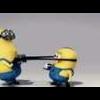
Academy 1/72 F-15E 494th FS "Dutchman" 91-0335
eng posted a topic in Ready for Inspection - Aircraft
Hi folks, just thought I'd share some shots of my latest completion - first one for 2025 too! Academy's 1/72 F-15E from the Lakenheath D-day boxing but finished with some stunning markings from the TwoBob's Drone Killers sheet that covers the 494th FS's deployment. There are some amazing options on this sheet for nose art covered jets and the first one that really caught my eye was "Dutchman" with some pirate themed artwork. It was a very tough choice and I have a GWH kit in work which will utilise one of the other options. The kit build is absolutely fantastic, superbly detailed, builds beautifully (I think its actually designed as a "push fit" kit), the only let down was the kits exhaust nozzle which is very basic. Aires to the rescue here with a lovely set of resin pipes! I would absolutely build this kit over and over, and the finished article looks every inch a replica of America's muscle machine (there's now more in the stash!!). Kit: Academy 12568 Extra's: Aires resin nozzles Decals: Kit decals (Cartograph) and TwoBob's Drone killers, Paint: Tamiya, Mr Colour and Vallejo, Weathering: Flory Dark dirt wash, W&N oils, pastels, silver pencil Hope you enjoy the pic's:- Eng -
Academy is working on a 1/144th Boeing E-7A Wedgetail. Sound logical after the still future 1/144 P-8A Poseidon kit (thread). Source: https://www.hlj.com/1-144-scale-p-8-poseidon-acd12635 V.P.
-
With the P-51D done and on the shelf, and the He-280 back on the table I scanned the stash and decided a chopper is due. Picked out this one and will try to go for the White JDF Bird. This should be an easy build with a challenging paint job. Stay tuned. Ran
- 15 replies
-
- 11
-
-
Too much choice for this GB, as previously discussed. But the new Wolfpak F-5E still has no issue date, a Vietnam GB looks likely for next year, I have just finished the second F-104 of the year and I quite like the NMF on the tail of my current F-100 WIP, so I am going to do this Academy F-84G with the only FM being decals (bought years ago) for a Misawa based example that I have found a few photos for, middle option. Chris
-
Hello, Here is my just finished Academy/Minicraft Beechcraft T-34A Mentor at 1/48 scale. A very nice and detailled kit, I have loved building this model. My T-34A is in USAF colors in the 50's with Caracal decals (I love these decals!!) Metal paint is LP11 silver laquer Tamiya paint followed a thin coat of Alclaad polished aluminium. Then, MRP 002 International Red. I hope you will like my Mentor. Lolo
- 16 replies
-
- 39
-
-
-
- Caracal Decals.
- Minicraft
- (and 1 more)
-
So this seems to be a popular kit (also I think the new Airfix version is a rebox)... After opening the box I was surprised at the number of parts included for such a tiny tank (Stormtrooper bits not included)... Instructions are a black and white booklet but seem easy enough to follow and the paint guide is also a black and white sheet (so no idea why that's not part of the booklet). I've been absent from the group builds for a while (work commitments) so figured I'll go for a straight OOB build to keep things simple and give me a chance of finishing. I think I'll go for one of the British variants, I'm not sure on whether to use the rubber band or individual link tracks but kudos to Academy for giving you the choice. So before I knew it I'd already built up the running gear... One thing I like about armour builds is how I can just get into the flow of building without the stop/start of needing to paint stuff - however, well now I need to paint the interior, so I decided to take a break for the evening. Today I got back into it, building up the interior parts into sub-assemblies (transmission, drive shaft tunnel, turret armour, turret basket, etc.) before airbrushing the interior parts with some Mr Surfacer 1500 White then hand painting the details before assembling. I've not done the greatest of jobs with the painting (spot the paint runs in the hull) though not much of the interior will be visible when finished. I added a bit of light grey washing to the floor plates to make them look a little worn. One thing I found is that the blanking plate for the bottom of the hull seems to make the interior sit a little high so I'm wondering if it should have been omitted or I've just messed up somehow (it doesn't appear to be made to fit from the bottom and the instructions show it being added from the top). So a good bit of progress for the weekend, hopefully this will be a quick build!
-
My build for this GB will be the Academy 1/35 Stuart "Honey". Not exactly something different. It will be built in the Western Desert Caunter scheme, as I'm sure will many other projects in this GB. I already have a Cruiser A9 and a Matilda in this scheme so I think the Stuart will go well with them.
-
The Catalinas have always been here and it is also a well-known Academy. In addition, Eduard sheet metal, Quickboost engines and some details added by myself. Built in 2007 and hasn't been touched since.
-
At Nürnberg Toy fair 2013. 1/72nd Lockheed Martin F-35A Lightning II by Academy - ref.12507. Source: http://www.primeportal.net/models/thomas_voigt7/academy/ V.P.