Search the Community
Showing results for tags 'meng'.
-

MENG Audi R8 LMS GT3 EVA RT Test Type-01 TSRT R8 (CS-008) 1:24
Mike posted a topic in Vehicle Reviews
Audi R8 LMS GT3 EVA RT Test Type-01 TSRT R8 (CS-008) Evangelion Racing 1:24 MENG via Creative Models Ltd The Audi R8 is a two-seat sport car from German auto-manufacturing giant VAG, and was introduced in 2007, based on their R8 Quattro concept car, with the same four-wheel drive platform that was heavily based upon the Lamborghini Gallardo initially, then the Huracán for the second generation, with a predominantly aluminium space frame beneath the sleek body panels, reusing the R8 Le Mans Prototype name on a vastly different looking vehicle. A soft-top Spyder was introduced in 2011 giving purchasers the wind-in-your-hair feeling at high speeds, while it was introduced into motorsport just after launch where it fared extremely well, looking fast even when parked. The motorsport-tuned offering was race-prepped on delivery, and cost roughly 2.5 times the street car, but there’s a lot included for the money, driven by a V10 5.2 litre engine outputting over 500hp through all four wheels. Its power, agility and reliability made it a popular purchase for GT racing teams, and a great deal of success followed over the coming years. In 2011 the LMS Ultra was launched, incorporating all the updates over the preceding years along with a wider bodykit that gave it a better aerodynamic performance, plus enhanced software that made gear transitions faster and smoother, widening the torque available to the driver across the range. The R8 moved to the second generation in 2015, with the race-spec option following swiftly behind, incorporating a substantial price rise and a power output nearing 600hp. The intention of the revised Evo was to improve the driver experience to satisfy the wide range of driver types that were behind the wheel of these cars due to its popularity, although the price is still an impediment to anyone of normal means, so we can’t all pick one up to go racing, more’s the pity. The Evo II arrived in 2021 with another price rise, more improvements to aerodynamics, engine and transmission reliability, torque output and heat dissipation, leading to a further improvement in driving experience for the racers. Production was intended to stop in 2023 but was delayed due to the ongoing demand for the type, so it should be seen for some years yet on the track, as even though Audi Motorsport are withdrawing from GT3 racing along with several other major manufacturers, they have agreed to provide tech. support and spares to customers until at least 2032. RUN'A Entertainment unveiled their new racing team in 2010, the name of which was linked to the Evangelion series of movies, anime and manga, using the Audi R8 in the 2020 season with Shaun Thong and Alex Au at the wheel, although David Chen was the pilot for the Macau Grand Prix. The Kit This is a reboxing of a recent tooling from MENG that depicts the Evangelion Racing Team's Audi R8-based vehicle that participated in the 2020 67th Macau Grand Prix GT Cup, their first international venture, driven by David Chen (Chen Wei An), who achieved third place in the complex street circuit at race’s end. The kit arrives in one of their usual satin-finished boxes with a digital rendering of the subject on the front of the top-opening box. Inside are six sprues and a bodyshell in pale grey styrene, four flexible black tyres in two sizes, a sheet of Photo-Etch (PE) metal with an almost black coating, a sheet of sticky mirrored labels for the wing and rear-view mirrors, plus the logos, a sheet of fabric-like material with the seatbelts pre-cut, four black poly-caps, pre-weeded masks for the windows on a clear backing sheet, two decal sheets, instruction booklet printed in colour with profiles on the rear pages. Detail is superb, but then it’s a MENG kit after all. The quality of the mouldings is first-class, and the accessories that come with the kit should mean that most modellers won’t have to expend more on aftermarket, although some are bound to anyway. Construction begins with the flat floor pan, which has a splitter added to the front, and the initial suspension arms in the space where the wheel arches will be. Some detail painting is required along the way, the shades called out in MENG/AK and Acrysion codes, which extends throughout the entire build process. Inner arches are fitted over the front suspension, slotting in struts and combining hubs to brake disks with moulded-in callipers, trapping a poly-cap in each one. The hubs are joined by inserting a steering linkage through the back of the arch and clipping it to the arm at the leading edges of the hubs without glue so that the wheels can remain steerable. The lower rear arches are similarly inserted, adding a latch-part to retain the bodyshell at the rear. The build moves to the interior next, making up the seatbelts using the pre-cut material from the sheet mentioned earlier. The various pieces are threaded through the belt furniture to create five-point racing belts, all of which slip through slots into the rear of the figure-hugging seats, gluing the ends out of sight. The interior is bereft of any creature comforts to save weight, and is instead detailed with the absolute bare necessities for the driver’s use and safety. It starts with the pedal box and fire extinguisher, adding three boxes into the passenger side on the right, another cylinder behind the driver’s seat, and a custom centre console that has a colourful instrument panel decal applied after painting. The steering wheel of a modern racing car is a complex piece of equipment that is covered in buttons, plus an Audi logo, mated to a two-part steering column that is fitted under the dash with a small instrument panel instead of the usual binnacle, with a tubular vent extension directed at the driver to keep him cool. The entire dash is made from carbon fibre, which is replicated here by six specifically shaped decals with carbon weave incorporated, which will need careful application and plenty of decal setting solution to ensure that they conform to the shape of the dash. The completed assembly is fitted on a pair of turrets at the front of the interior, then the completed interior is placed in the floor pan using the same technique. Whilst this model might look like a kerbside kit, the mid-mounted V10 engine is visible through the rear window, and is supplied as part of the kit, all the way down to the sump. The V-shaped block is made from top and bottom halves, adding cylinder heads to the top of each bank, painting them red, and the plugs black. An end cap is added to the transmission with drive-shafts exiting each side, and detail parts are dotted around the block to add interest and cover blank space. Two exhaust manifolds are made from separate halves, adding the exhaust tips at the rear, and fitting them under the cylinder banks on depressions in the surface. The air intake pathway is built from a side-by-side trunking that has a tube laid crossways and two boxes under it, adding it to the top of the engine once completed, installing the completed engine into the aft of the floor pan. Like all racing cars, a substantial roll-cage is found inside the car, made from just three parts initially, the aft portion with a box-section profile, while the frame in the cab is tubular. It is painted and then installed on the floor, stretching back past the engine assembly to provide extra protection from behind, in the hope that the driver doesn’t get too close to the power plant in the event of a crash. A small bulkhead is made up from a styrene part with a clear upper portion, adding a two-part reservoir to the left side within the engine compartment, then the roof of the cage is made from another large contoured part that is well-detailed, and mates with the rest of the cage to complete the driver’s protection. The rear suspension is created in a similar manner to the front, making up hubs that have a poly-cap in between them and the brake disk/calliper combination, slotting the pivots into holes in the swing-arms, and adding a suspension strut with gaiter in between the arms and an A-frame incorporated into the roll-over cage. The tops of the inner arches are fitted to the top of the lower parts added earlier, then the wheels can be made using two pairs of well-moulded rims with spokes around the perimeter, slipping the correctly sized tyres over the front edge and butting them up to the lip at the rear of the rims. Each rim has a pin moulded into the centre rear that slides through the disk hub and into the poly-cap, allowing them to be fitted and removed during construction and painting, whilst letting them rotate freely. The bodyshell has the MENG logo and copyright details moulded into the interior roof in raised letters, plus a few ejector-pin marks in case you want to hide those with some filler and careful sanding. There are also a couple of sprue sections across the windscreen and rear window cut-outs, which should be nipped free and the sprue gates made good before proceeding. You should also decide on a colour to paint the interior, as only some parts have been picked out for painting black, while the main inner surfaces colours are left to you to decide from your references, but a fair bet would be that they match the doors, which are black. The window glazing is supplied with masks to assist you with painting the surrounds black, which is the first task, and extends to the front, rear and side windows. A large recess is cut out of the bonnet for the cooling system, which has a deep ‘bath’ inserted that has a two-layer fan assembly inserted before painting and installation. The headlamp reflectors are painted chrome and are inserted into their cut-outs from within, adding another intake in the bumper, after painting it black, fitting the rear-view mirror in the centre of the windscreen frame, then applying a chrome sticker to depict the mirror surface. The air-intakes for the brakes have their louvres applied to an insert that stretches across the front of the bumper, with another pair fitted into the fronts of the rear arches, the louvres painted light orange before installation, then two covers are fitted to each of the front corners, adding the headlamp glazing at the same time, plus two aerodynamic strakes on each corner. The aft light lenses are applied to the rear of the car after painting the reflectors chrome, fixing a conical lens in the space below on the right of the bumper. The doors are moulded separately from the bodyshell, and have separate hinge units applied to the A-pillars, and triple louvres added to the upper portion of the B-pillars, adding two decorative accent panels where the quarter-light would be and behind the door, plus two mesh grilles from the PE sheet in the door shut-lines on each side. The doors are made from inner and outer skins that hold the glazing between them, plus a rectangular pivot in the leading-edge, and a wing-mirror that slots into the skin of the door, which has a mirrored sticker inserted into the rear on each side. All this assumes you masked and painted the glazing in one sitting, but if you didn’t you should probably kick yourself about now. The completed doors clip into the hinges without glue, and can be opened and closed whenever you like, joining the bodyshell to the floor pan on the clips added earlier. The large mesh grille for the intake in the bumper is curved, and a jig is included on the sprues to assist with bending it to shape, but it is probably wise not to anneal it for fear of marring the matt black finish. Happily, the curve is gradual, so shouldn’t be an issue. Later variants of the R8 were fitted with a rear wing to add extra downforce, which in this case is made from two J-shaped supports for the separate wing, which has two end-caps attached after painting and decaling with a large Audi Sport logo, a scrap diagram showing the moulding overflow ‘pips’ that should be removed from the support frames. The rear windscreen is masked and framed with black paint, locating it in the styrene boot lid, which is lowered into position over the engine bay, taking care to align the slots with the wing supports that sprout out of the rear of the engine bay frame. Markings This is a special edition depicting the Evangelion R8 that competed at Macau in 2020, so the decals are specific to this vehicle. From the box you can build the following: Decals are printed in China, having good registration, sharpness and colour density, with a thin gloss carrier film cut close to the printed areas. It includes carbon fibre-effect decals for the dash, instrument decals, as well as the branding, and striping, plus those small self-adhesive Audi, V10 and R8 logo badges for the front, wing and rear of the vehicle, not to mention four Brembo logos for the brake callipers. Conclusion MENG create good car models, and this one is no exception, with high levels of detail from the box, plus many extras that would be considered aftermarket by many other manufacturers. It also helps that the R8 is a good-looking car in road-going or racing forms, with this bright scheme a little different from the norm. Highly recommended. At time of writing, this kit is available from Creative Models Ltd at a healthy discount. Act now to avoid disappointment or other negative feelings related to its absence from your stash Review sample courtesy of -
Hi All, Latest project started few days ago, not a massive WIP, build is simple ish, just adding a few aftermarket bits, Aber cleaning rods, Panzerart barrel when it arrived, R model tracks, have 3d tools but the brackets I have for shovel and axe head are not good enough, tools and clamps by mig. Will be Richard Freiherr Von-Rosen machine nr 300 Paderborn Sept 44. Read his book - very interesting read finished a General in 1982. hoping the rest comes up as good as the wheels, just cannot see if sprocket and idler were cam from the video clip. Cheers All Mark
- 58 replies
-
- 20
-

-
 #11/2024 Most modern aircraft my dad has built so far Meng kit, main markings with Caracal decals, stencils are a mix of the kit and Caracal ones. Overall not a bad kit. The new Tamiya kits may be superior but also twice the price... Main colour painted with Mr Paint Camouflage Grey FS36170, lighter RAM panels with a mix of Mr Paint Camouflage Grey FS36170 and Dark Gull Grey, canopy tinted with a mix of Clear Yellow and Smoke. Added brake lines by using lead wire. Build thread here https://www.britmodeller.com/forums/index.php?/topic/235137703-state-partnership148-lockheed-martin-f-35a-lightning-ii-134th-fs-yellow-scorpions-vermont-ang-the-green-mountain-boys/ In 2019, the Vermont ANG was the first NG to be equipped with the F-35A. In 2022, Austria joined the US State Partnership Program, where every state´s National Guard becomes partner with one ore more foreign military forces. Because Austria and Vermont had already military relations since the 80ies when Austria helped build up the mountain warfare school in Vermont, the choice was more or less obvious. To celebrate the one year anniversary, two F-35s visited Austria last summer during the exercise Air Defender 2023 in Germany and did some flights together with our Austrian Airforce Eurofighters. DSC_0001 by grimreaper110, auf Flickr DSC_0002 by grimreaper110, auf Flickr DSC_0003 by grimreaper110, auf Flickr DSC_0004 by grimreaper110, auf Flickr DSC_0005 by grimreaper110, auf Flickr DSC_0006 by grimreaper110, auf Flickr DSC_0010 by grimreaper110, auf Flickr DSC_0008 by grimreaper110, auf Flickr DSC_0009 by grimreaper110, auf Flickr DSC_0014 by grimreaper110, auf Flickr DSC_0010 by grimreaper110, auf Flickr DSC_0005 by grimreaper110, auf Flickr DSC_0012 by grimreaper110, auf Flickr DSC_0006 by grimreaper110, auf Flickr DSC_0007 by grimreaper110, auf Flickr DSC_0015 by grimreaper110, auf Flickr DSC_0016 by grimreaper110, auf Flickr DSC_0013 by grimreaper110, auf Flickr DSC_0017 by grimreaper110, auf Flickr DSC_0018 by grimreaper110, auf Flickr DSC_0019 by grimreaper110, auf Flickr DSC_0020 by grimreaper110, auf Flickr DSC_0021 by grimreaper110, auf Flickr DSC_0022 by grimreaper110, auf Flickr DSC_0023 by grimreaper110, auf Flickr DSC_0001 by grimreaper110, auf Flickr DSC_0012 by grimreaper110, auf Flickr DSC_0014 by grimreaper110, auf Flickr DSC_0001 by grimreaper110, auf Flickr DSC_0002 by grimreaper110, auf Flickr DSC_0003 by grimreaper110, auf Flickr
 -
In 2022, Austria joined the US State Partnership Program, where every state´s National Guard becomes partner with one ore more foreign military forces. Because Austria and Vermont had already military relations since the 80ies when Austria helped build up the mountain warfare school in Vermont, the choice was more or less obvious. To celebrate the one year anniversary, two F-35s visited Austria last summer and did some training flights with our Austrian Airforce. Gonna use the Meng kit with markings from Caracal, printed by Cartograf. DSC_0001 by grimreaper110, auf Flickr DSC_0002 by grimreaper110, auf Flickr
-
Spice Harvester from Dune (MMS-013) MENG via Creative Models Ltd Dune began in the 1960s as a long-running series of books by Frank Herbert, and several attempts have been made to realise the initial book in movie form, with varying levels of success. David Lynch made a decent, if simplified attempt at it in the 1980s, although it was a flawed movie with irritating voice-overs (from my point of view, at least), while a three-part TV movie in 2000 was considered a reasonable adaptation, but I haven’t seen that one. This latest expedition into the deserts of Arrakis benefits from the availability of realistic Computer-Generated Imagery (CGI) that can be used to enhance the scope and scale of the saga as it deserves, without looking false. It also benefitted from a massive budget and an acclaimed director, not to mention a cast of many famous actors, although David Lynch’s version also had some famous faces, including a young Patrick Stewart as Gurney Halleck before his Star Trek days. The new film has been split into two episodes to portray as much of the book’s content as possible in an effort to retain the important aspects of the original story, and part 2 has been out now for a couple of months, rounding off the original story, allegedly, with the possibility of more to come if it has made enough money for the studio, which I expect it has by now. I haven’t seen the second part yet, so no spoilers please! The Spice Harvester is an essential part of the mining of the spice Melange from the deserts of Arrakis, and they are essentially factories on tracks that are dropped by their carriers onto parts of the desert where spice has been detected, in order to extract it. The noise of the Spice Harvesting attracts the giants worms that are native to Arrakis, as they are drawn toward repetitive vibrations, and when they get there, woe betide anyone or anything that remains on the sand. Each harvester is protected by a group of spotters in Ornithopters that keep an eye out for incoming worms, as their appearance is almost inevitable. When one is spotted, the carrier craft swoops in, picks up the factory and airlifts it to safety. In theory. We see what happens to a Spice Harvester when the carrier arrives too late in the first film, although all the crew survive thanks to Duke Leto Atreides happening by with a flight of Ornithopters. The Kit Like the Ornithopters, this kit is also scale-free, although it’s pretty clear that it isn’t the same scale as the ‘thopters, as the factories are massive, in order to be able to mine and process Spice in an economical manner. The kit arrives in a larger end-opening box with a painting of the factory on the front, and instructions on the rear, plus the same basic instruction sheet in four languages and the Japanese safety and contact sheet found in the Ornithopter kits. There are four sprues in olive green/brown styrene, plus a small decal sheet in its own bag, containing just three decals, mainly because factories tend not to be colourful anywhere in the galaxy because it’s not cost-effective. Construction begins with the main hull, which is a slab-like part with tiny aircon units, heat-exchanger pipework and other such greeblies on the top, and very little other than the track housings on the underside. The underside is the first part to be used, adding track attachment straps across the front and rear sections from within, then flipping it over onto its back to mount bogies for the tracks, two at the front and two more on the back. The roof is applied to the top, and sixteen trapezoid track units are made from four parts each, with track links moulded-in to improve the detail. They are plugged into each of the track attachment arms hanging from the holes in the underside in fours, two on each side of the arm. The front, rear and side walls are attached to the blank walls between the top and bottom surfaces, adding more detail, then the Spice mining conveyor is created from top and bottom halves to make hollow pathways, which is mounted on a carrier that is inserted into a trough moulded into the underside in the direction of the vehicle’s travel. Markings There are just three decals included, and there are no colour suggestions on the box, as the machines are a dirty olive green/brown in the movie. If you intend to make a more realistic model and paint it, there are tons of shades from all the major manufacturers that could be used, and the opportunity for weathering with heavy sand discolouring could be quite fun if you like that sort of thing. The decals are printed in China, and suitable for the task in hand, as they’re one colour, and almost too wee to see. Make sure you’ve not tied one on the night before applying them, as you’ll need steady hands. Conclusion We understand that 1:72 Ornithopters are on their way from MENG, but this factory vehicle is unlikely to be amongst the up-scaled ships getting an airfing due to its actual size in the movie, so this may be your only option. I could of course be totally wrong! Highly recommended. Review sample courtesy of
-
Atreides & Harkonnen Ornithopters from Dune (MMS-011 & MMS-014) MENG via Creative Models Ltd Dune began in the 1960s as a long-running series of books by Frank Herbert, and several attempts have been made to realise the initial book in movie form, with varying levels of success. David Lynch made a decent, if simplified attempt at it in the 1980s, although it was a flawed movie with irritating voice-overs (from my point of view, at least), while a three-part TV movie in 2000 was considered a reasonable adaptation, but I haven’t seen that one. This latest expedition into the deserts of Arrakis benefits from the availability of realistic Computer Generated Imagery (CGI) that can be used to enhance the scope and scale of the saga as it deserves, without looking false. It also benefitted from a massive budget and acclaimed director, not to mention a cast of many famous actors, although David Lynch’s version also had some famous faces, including a young Patrick Stewart as Gurney Halleck before his Star Trek days. The new film has been split into two episodes to portray as much of the book’s content as possible in an effort to retain the important parts of the original story, and part 2 has been out now for a couple of months, rounding off the original story, allegedly, with the possibility of more to come if it has made enough money for the studio, which I expect it has by now. I haven’t seen the second part yet, so no spoilers please! The new film of course has some great new ships, which includes a less toy-like Ornithopter, which is more insectoid and less clockwork bubble-bug than the 1984 edition. They are quadruped aircraft with eight helicopter blade-like ‘wings’ providing the lift in an insectoid manner, and a pointed nose that incorporates expansive windscreens that probably don’t give as good a field of view forward as you’d think. The Kit Each of the two Ornithopters arrives in a small end-opening box, and are similar in looks and box style to Bandai’s Vehicle series of Star Wars kits, as they too are sold without scale, and the dominant packaging colour is black, plus the stand included is functionally identical to the Bandai offering. The instructions are printed in colour on the back of the box, and inside are four or five sprues in an olive green/brown shade of styrene, a small black sprue containing the stand parts, and a separately bagged decal sheet. Detail is good, but due to the small scale, the canopies are solid and are later depicted by decals, and the landing gear can be posed retracted or deployed, using the stand, which bears more than a passing resemblance to the Bandai stand for either option. There is also a small sheet that briefly discusses in four languages how to remove parts from the sprues and apply the decals that are included. A tiny slip of white paper is folded into that sheet, but as it is all in Japanese, my phone shows that it contains contact details for Japanese purchasers to get in touch if they have a problem, and some warnings that the kit is suitable for people of 14 years or older, and to be wary of inhaling dust created by sanding. The kits share three of the olive sprues, as the blades and landing gear are common between both, adding one more sprue for the Atreides ‘thopter that has a straight tail boom, and two for the Harkonnen vehicle, which has an alternative forward glazing and a forked tail to differentiate it quickly on screen. They can be built as snap-together kits, but will benefit from gluing, particularly if you intend to paint and weather them, applying the decals during the process. Construction begins with the two fuselage halves, mounting the cockpit and nose at the front, and a single-part tail for the Harkonnen ‘thopter, or a two-part straight tail for Atreides. Atreides has four wing-root dog-bones affixed in pairs at the top and bottom of both the fuselage sides, which later receives the eight blades in either the folded position, or flared to the perpendicular outboard for flight, while the Harkonnen bird has only three per side. The landing gear uses different parts for stowed and deployed, slotting into the underside of the fuselage. The stand has three options of where to place the support on the base, and at the top of the support is a ball-joint that the cup clips onto, a peg on top joining it to the underside of the fuselage to give the impression of flight, and the ability to adjust the angle and bank of the model to your needs. Common Parts to Both Kits Atreides Ornithopter Specific Parts (MMS-011) Harkonnen Ornithopter Specific Parts (MMS-014) Markings The decals pictured above are essentially the glazing of the canopies, plus a few tiny emblems for the sides and front of the fuselage that differ between the kits. They are well-printed and suitable for the task, and the main windscreen panel includes the internal framing, but if you wish to go off-book for your paint scheme, you may consider painting the windscreens with the aid of masks instead to avoid having to match the colour on the decals. Conclusion Pocket-sized, and pocket-friendly, these kits are small enough to slip in between other models in your cabinet, and although they don’t have cockpits depicted for practical reasons, the rest of the detail is crisply defined. Highly recommended. Atreides Ornithopter (MMS-011) Harkonnen Ornithopter (MMS-014) Review sample courtesy of
-
 New tool kit from Meng Model - ref. LS-015 - McDonnel Douglas F-4G Phantom II - WildWeasel Source: http://www.meng-model.com/en/contents/59/512.html Box art V.P.
 -
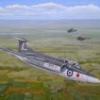 FIAT G-91R.1 2 Stormo, Italian Air Force Treviso, Italy, 1985 This is the Meng 1/72 G-91 kit built more or less from the box – I even used kit decals this time which worked really well. A new ejection seat was needed for which I used an Aeroclub white metal example from the stash. Surface details are very fine and emphasised the control surfaces slightly to make them stand out from panel lines. The vortex generators on the rear fuselage were so fine that they had almost disappeared and I used very small pieces of stretched sprue to represent them better. Overall, though, a nice little kit. It’s brothers are a German aircraft from the Revell kit, a two-seater from the Aeroclub kit with parts from Revell and a Portuguese example which is basically Revell.
- 15 replies
-
- 47
-
-
-1-1MINIATURA.thumb.jpg.bd7a7e672869500d45ee6e80478f6f25.jpg) Hi Pals, I finish the model and here are some photos of it. To say that it was a quality and well finished kit, without major problems that any modeller with some experience knows how to solve satisfactorily. Added to that is a model that, by not having interiors, and with clean and simple lines, helps a lot with its assembly. It's practically OOB, with the exceptions of the added Zimmerit (Tamiya stickers), the ABER metal antenna, and an MG34 machine gun, from the spare parts box and the metal front MG as well. The Zimmerit, not being from the MENG brand, could be a serious problem, but, surprisingly, the dimensions of the two kits (Tamiya and MENG) must be very similar, because there were no major mismatches, everything was quite well adjusted. In the instructions, they indicated that it had to be placed before the accessories, but I didn't see it, and I did it the other way around...maybe it was more difficult, but with a cutter, I was able to cut off excess. In some places I used CA glue to avoid peeling later. Note that the front and rear hooks, as links, should not be placed without having joined the hull pieces, because otherwise they cannot be joined. In my case, I put them in to prevent them from getting lost, since they don't come with glue, so I had to do a bit of thankless work to fix it. The tracks turned out to be simple, since the pieces are a good size, and their fit is also very good, and the kit also includes some jigs to help you assemble them. The PEs are few and easy to work on (I love it...lol). I didn't really like the paint schemes proposed by the kit, and although I did tests, in the end, I decided to clean it (several times), and make a model with the basic color, and with little use, without marks. For the painting I used the AK DK set, with AB, modulating Vallejo MA Red Primer layer, and for the weathering, 501 oils and various pigments. Small leaves added at random points on the model, fixed with matte varnish. I have only varnished with satin, the parts that do not wear Zimmerit, I imagine it would be more matte than glossy, and neither the parts that accumulate dust. Thank you very much for watching and commenting as always. Greetings and Happy New Year 2024.🎄 Francis.👍 Some shots on detail... A couple in B/W... The (hypothetical) historical photo... And a few with his brother Henschel (Zvezda posted on the forum): https://www.britmodeller.com/forums/index.php?/topic/235094156-all-the-beasts-hail-to-the-kingtiger-kintiger-henschel-turret-135-zvezda/#comment-4095968
Hi Pals, I finish the model and here are some photos of it. To say that it was a quality and well finished kit, without major problems that any modeller with some experience knows how to solve satisfactorily. Added to that is a model that, by not having interiors, and with clean and simple lines, helps a lot with its assembly. It's practically OOB, with the exceptions of the added Zimmerit (Tamiya stickers), the ABER metal antenna, and an MG34 machine gun, from the spare parts box and the metal front MG as well. The Zimmerit, not being from the MENG brand, could be a serious problem, but, surprisingly, the dimensions of the two kits (Tamiya and MENG) must be very similar, because there were no major mismatches, everything was quite well adjusted. In the instructions, they indicated that it had to be placed before the accessories, but I didn't see it, and I did it the other way around...maybe it was more difficult, but with a cutter, I was able to cut off excess. In some places I used CA glue to avoid peeling later. Note that the front and rear hooks, as links, should not be placed without having joined the hull pieces, because otherwise they cannot be joined. In my case, I put them in to prevent them from getting lost, since they don't come with glue, so I had to do a bit of thankless work to fix it. The tracks turned out to be simple, since the pieces are a good size, and their fit is also very good, and the kit also includes some jigs to help you assemble them. The PEs are few and easy to work on (I love it...lol). I didn't really like the paint schemes proposed by the kit, and although I did tests, in the end, I decided to clean it (several times), and make a model with the basic color, and with little use, without marks. For the painting I used the AK DK set, with AB, modulating Vallejo MA Red Primer layer, and for the weathering, 501 oils and various pigments. Small leaves added at random points on the model, fixed with matte varnish. I have only varnished with satin, the parts that do not wear Zimmerit, I imagine it would be more matte than glossy, and neither the parts that accumulate dust. Thank you very much for watching and commenting as always. Greetings and Happy New Year 2024.🎄 Francis.👍 Some shots on detail... A couple in B/W... The (hypothetical) historical photo... And a few with his brother Henschel (Zvezda posted on the forum): https://www.britmodeller.com/forums/index.php?/topic/235094156-all-the-beasts-hail-to-the-kingtiger-kintiger-henschel-turret-135-zvezda/#comment-4095968- 51 replies
-
- 37
-
-

-
- KINGTIGER
- PORSCHE TURRET
- (and 1 more)
-
Hi all! I've recently sold a few model kits I wasn't going to build so I though I'd reinvest in a kit I've had my eye on for a while now. Picked up Meng's F-4E and the Isracast conversion set to build a Kurnass, as well as the Isradecal Kurnass set and some Quinta Studios 3D cockpit decals. I also have Hasegawa's US aircraft weaponry set which includes early GBUs and targeting pods. This is my first look at a Meng kit and just looking over the sprues it looks absolutely brilliant! I've heard good things about this kit and I've never had an issue with Quinta or Isradecal parts in the past so I'm very much looking forward to this build. I'm going to take things slow and hopefully do this kit justice. As far as the scheme is concerned I have a few potential options. I own the Double Ugly IDF Phantom books so have a great source of reference images. My options are: -201 Squadron Kurnass 2000 with 4 x GBU-12s and a Pave Spike targeting pod. -119 Squadron Kurnass with 2 x AGM-62 Walleye guided bombs and datalink pod. -119 Squadron Kurnass with 4 x GBU-10 guided bombs and a Pave Spike targeting pod. Source: Double Ugly Israeli Phantoms I'm still undecided, the Kurnass 2000 would require extra work as I'd have to scratch build a few small parts but the heavily worn underside looks like a great challenge to replicate. Thanks for looking in- looking forward to this!
- 1 reply
-
- 4
-
-
- Meng
- F-4E Phantom
- (and 1 more)
-
colourblind Middle aged beginner coming through. First stages down.
-
Chinese J-20 Stealth Fighter (LS-002) 1:48 MENG via Creative Models Ltd The J-20 is China’s first fifth generation fighter, making heavy use of stealth technologies to give it an advantage during operation in a contested air-space, starting the project in the 2000s as a successor to a previous project earlier in the decade. Chengdu aviation developed the J-20 in response to the requirement, and it has been a work in progress, even after the initial ground-handling and flight testing that occurred in 2010, using Russian built engines that were fitted as a temporary measure whilst they worked out the issues with their own indigenous engines. The new high-tech Chinese engines were expected to provide a significant boost in performance, adding stealth characteristics to the exhausts, and the possibility of vectored thrust to improve manoeuvrability. A home-grown engine designated WS-10 was chosen initially to remove their reliance on Russian engines, with the more advanced WS-15 expected to be fitted to new-build airframes when development was complete, then retro-fitted to earlier airframes as the opportunity arose. Several prototypes were seen performing flight tests throughout the next decade, with limited numbers of the type entering service toward the end of the decade, with improvements still coming on stream throughout this period. After the initial low-rate production batch, full production started, and it soon gained momentum, leading to the replacement of many older 4th generation fighters in service, particularly around China’s borders, where they would expect to intercept intruders. Some airframes have been used as adversary trainers, where they take the part of F-22s or F-35s in combat, to allow both “sides” to learn how to cope with adversaries flying different generations of fighters. The design of the jet, known by NATO code Fagin was established and fixed for full production, adding two other variants to the development roster, one of which represents the first two-seat stealth fighter in service in the world, with a prototype built and observed in 2022 under the designation J-20S. The two-seater isn’t simply a trainer, but will also be used as a combat airframe where the workload is shared between the two crew, using sensor fusion, carrying out electronic warfare duties, or controlling UAVs or drones as part of their weapon systems as a force-multiplier. The J-20B is an improved variant of the single-seat type that has improved stealth characteristics, and is thought to use the final WS-15 engine, which increases the power available for super cruise substantially, and this too was also first spotted in 2022, demonstrating the rapidity at which the type is developing. The ongoing improvements to the J-20 are rapidly bringing it up to a similar capability to the American F-22, despite concerns that a canard-equipped fighter would have compromised stealth capabilities, which seems not to have been an issue as far as the Chinese engineers and designers were concerned. The main weapons bay is found in the belly, where the larger weapons are carried, with serrated doors and margins of the bay to scatter radar returns. The smaller weapons bays in the sides of the fuselage behind the intakes are similarly stealthy, but the weapons can be deployed and the bays closed again to maintain stealth, allowing the missiles to be launched fractionally faster without having to open doors and bring out the missiles before launch. It is thought that these bays are in the process of being redesigned to accommodate 6 missiles using a new ejection rack, and research is underway to reduce the diameter of future missiles to assist with packing as many as possible into the bays without having to use the four underwing hard-points that will spoil its stealthy profile. The Kit This is a new tooling from MENG that was released in the last days of 2023, taking some time to reach Europe, and it is the most recent of only a few kits of this type in 1:48, so should more closely represent an in-service airframe. It does appear to have the Diverterless Supersonic Inlet (DSI) bulges that were more recently added to the design, one of the engineering innovations that both improves the aircraft’s stealth, and reduces its weight by offloading additional complexity of the intakes, hiding the rotating engine faces by using a serpentine trunk within the fuselage. The kit arrives in a substantial top-opening box with a painting of a J-20 launching missiles from its open main bay, and inside the box there are seven sprues and three fuselage parts in grey styrene, a clear sprue, a clear red sprue, a strip of four polycaps, a small Photo-Etch (PE) fret, decal sheet, and the instruction booklet, printed in colour on glossy paper, and stapled into a portrait sub-A4 format. For a change, construction begins with detailing the upper fuselage part, adding two polycaps in sockets for the canards on the fuselage sides, fitting two clear sensor windows forward and aft of the cockpit opening, and applying the shallow refuelling probe bay on the starboard edge of the nose chine. Modern cockpits are relatively simple by comparison to earlier fighter jets, with many of the knobs and switches moved to a large Multi-Function Display (MFD) that takes up most of the instrument panel. The cockpit tub is fitted with rudder pedals, plus side console mounted throttle and stick, using the ‘Hands on Throttle and Stick’ (HOTAS) schema that is common to modern fighters. Once painted, the tub is inserted into position, locating on four turrets within the upper fuselage, applying plenty of glue for a strong bond. At the rear of the upper fuselage, the serrated cowlings of the twin engines are fitted on a pair of turrets with a healthy overlap for strength, and two more polycaps are inserted in cups that are glued under the pivot-points of the twin tail fins, one each side of the engines. The intakes are made up from two halves each, adding a circular insert depicting the engine front to the aft end, and joining them together on two pins and sockets that hold them both at the correct angle. After painting the trunk interiors a pale greyish-blue, the completed assembly is mated to the lower nose part, fitting the nose gear bay, a detailed insert for the forward sensor, which is glazed over with a faceted clear part, and has a clear red window fitted on either side. To be able to close the fuselage, the three weapons bays must be prepared, starting with the main bay, the largest of the three. This is made from a large roof with moulded-in end walls, adding the side walls and a central divider, painting it white before building the missiles, which are almost complete save for two fins at the rear and a conduit down one side of the missile body, after which they are mounted on a slender pylon and four of them can be installed within the bay. The completed main bay is then clipped into the lower fuselage, locating on three turrets, then turning to the intake-mounted weapons bays. The main parts of these are moulded in a C-profile, fitting end walls to each of them, and installing those in the sides of the intakes, along with the main gear bays that are made from three parts each, and all bays painted white. A clear red window is inserted in a cut-out in the port intake side, reducing the number of sub-assemblies before fuselage closure to two. Those two are identically built exhausts, which can be made with the petals constricted or opened, by using different sets of petal parts around the central circular former. Each petal section has a detail insert on the interior face, then six sections are arranged into a cylinder around each former, the aft section differing in shape to depict your chosen exhaust shape. The exhaust trunk is made from two half cylinders that are closed around the afterburner ring, and has a representation of the rear of the engine closing the forward end, joining the petal assembly to the opposite end of the trunk, and painting it accordingly with shades of burnt metal. The lower fuselage receives the two exhausts in the rear nacelles, while the nose and intake trunking assembly is installed in the front of the part, extending the lower fuselage to full-length. The upper fuselage is then glued over the lower, and it’s worth noting that the two fuselage halves have stiffening ribs criss-crossing them to add strength to the assembly, and much of the blended wing structure is moulded into the fuselage halves, as is often the case with modern stealthy aircraft models. You have a choice of portraying the weapons bays open or closed, showing off the unique talents of these short-range weapons bays that allows them to close the doors with the weapons extended for use. The simplest option is to nip the overflow pips from the doors and fit them in the closed position, ready to move on to the next step. To extend the missiles first requires the building of one or two missiles, which have two separate fins, a nose part, and long pylon, painting and stencilling them before installing them. The bay has a flat-faced insert glued into the bay, which has three curved supports for the missile so that it is suspended outside the bay and slightly below so that the door can still close. The closed doors are each one part with three small slots in the bottom of the doors to cater for the supports, while leaving the doors open adds another part with internal ribbing structure, plus hinges that suspend it from the upper edge of the bay. This is repeated on the opposite side, with a choice of three options per side, which you can mix and match at your whim. The main bay doors must be open to deploy missiles, so there are two choices, the simplest being the closed doors, which is depicted by a single part with serrated edges and hinge lines engraved to give the bay a realistic look. To pose the doors open, three door sections are fitted together with an actuator ram at either end, mounting on the outer edges of the bay, with a scrap diagram showing how they should look from ahead. The landing gear is safely tucked away inside the jet during flight, so only their doors need to give low-observability a thought, and as such their structure is very familiar. The tyres are moulded as two halves, as are the hubs, joining together to make each main gear wheel, which fits to the lower end of the sturdy struts, adding separate oleo-scissor links and a lightened retraction jack that is formed from three parts, with another small strut near to the top of the leg. The two legs are handed, and are fitted inside each bay, locating firmly in the bay for strength. The nose gear leg has two tyre halves that close around a single hub part, flexed into position between the two yoke legs. The strut is adorned with separate scissor-links, twin landing lights with clear lenses, and the retraction jack plus a captive bay door, for which there is a separate scrap diagram to assist with detail painting the part. This too is mounted securely in the bay, with a side-opening bay door with three hinges attaching it to the starboard side. While the model is upside-down, the two canards are push-fitted on the intake sides, two strakes are glued to the sponsons on either side of the exhausts, adding leading-edge slats that can be deployed or retracted by using different parts. A four-lensed sensor is fitted on the belly with a clear lens inserted from behind, and a tubular assembly is located next to it, which appears to be a Luneberg Lens, which is the mechanism by which any stealthed aircraft can be tracked during peacetime. It is understood that the latest airframes have a retractable version of this lens, so they can transition to a war footing without landing. At the trailing edge of the wings, two flap sections with stealthy actuator fairings moulded separately are fitted, selecting different parts for the flaps down option. The final flying surfaces are the all-moving fins, which have a fixed portion glued to the fuselage, through which the pin on the fin projects, securing it in the polycap fitted at the beginning of the build. This should allow them to be removed for easy painting and decaling, and later offset if you feel the urge. Whilst most of the cockpit was built very early in the build, it is missing some key components, one of which is the ejection seat. This is made from two halves of the chassis, adding three seat cushions and a flip-up pair of arm rests, with a detail insert under the base cushion to depict the pull handle. A flat cover is applied to the back of the seat, with scrap diagrams and colour call-outs helping with accurate painting of the assembly. You then have a choice of using the included pilot to crew your model, or fit the supplied PE seatbelts to the empty seat, using the scrap diagrams to assist you with shaping them before installation. The pilot figure has separate arms, a two-part helmeted head, and an oxygen hose, with another detailed painting guide with two views to the side, colour call-outs given in MENG colour and Gunze Acrysion codes. The pilot’s instrument panel is next, applying decals to the panel’s large screens and detail-painting the various buttons moulded into the part. The coaming is glued to the top of the panel, adding the HUD from two clear parts, one inserted into a styrene frame, painting the front pane a transparent green before installing the completed assembly in the front of the cockpit, remembering to detail paint the instrument cluster in the coaming edge. A pair of angle-of-attack probes are fitted to the sides of the nose at the same time, then you have another choice to make. Create the canopy from a simplified set of parts, or go for more detail that includes PE parts. The simple canopy has the det-cord to shatter the canopy before ejection moulded-in along with a couple of interior frames, which are recessed within the part, and can be painted with white or grey acrylic or other water-based paint, wiping the excess away before it has chance to dry, leaving the paint in the recesses to represent the cords. Both options use the same lower frame, which is prepared by fitting two side frames, a small triangular support at the rear, and demisting tubing at the windscreen end. If you are using the PE parts, there is a separate blank canopy, and it is suggested that you bend the PE det-cord and heater hoses before gluing them to the lower frame, fitting the canopy in place over it once they are painted. The simplified canopy with the cord moulded-in is similarly glued in place over the lower frame without the PE parts if you don’t fancy your chances wrangling them. Either completed canopy can be fitted to the cockpit in the open or closed position by selecting the appropriate opener strut, adding a two-pronged hinge part to the rear of the open option that slots into the front of the spine. The choices aren’t quite finished yet, as you can close the refuelling probe bay by fitting the door over the area, but if you wish to deploy the probe, it has a tapering ladder support and a different door part, inserting the rear of the probe into the bay and setting the correct angle courtesy of the support. It has a bright red section near the business end of the probe, which is best painted before installation. Speaking of ladders, which we kind-of were, there is a crew ladder included on the sprues, made from just two parts, one of which is well protected by a deep extension to the runner next to it, protecting the rungs moulded into that half of the assembly. This is latched over the lip of the cockpit on the port side, and you can leave it loose or glue it in place as you see fit. Markings There is just one scheme given on the rear pages of the instruction booklet, but a full set of tail-codes are included, so you can build any airframe in the low-viz grey cloud camouflage shown below: Decals are printed in China with good registration, sharpness and colour density, with a thin gloss carrier film cut close to the printed areas. It includes many stripes around the weapon and gear bays, which are supplied as sensibly designed sections that should remove as much frustration as possible whilst applying them. Slime lights and various sensor dielectric panels are also included on the sheet, and on an addendum sheet (not pictured) that is barely the size of a postage stamp, a single “bunny-ears” decal numbered 25 is included, so be careful not to lose it. Conclusion This is a large aircraft, around the same size as the immense Mig-31, and MENG have done a good job of representing the detail. Most modellers could build it straight from the box thanks to what’s included, although some aftermarket is bound to come out soon. Very highly recommended. Review sample courtesy of
-
Kit - Meng Paint - Lacquer camo tones, W&N oils for all weathering effects. Decals - Kit Extras - Hasegawa AGM-84 Harpoon missiles. FA-18F Super Hornet VFA-2 'Bounty Hunters' USS Abraham Lincoln 2003/04 Other than the Harpoon missiles, what you see here is exactly what comes in the (very substantial) Meng box... and IMHO is one of the best 1:48 kits available today. Everything fits perfectly, I don't recall using anything more than a 'smear' of putty in any of the major construction (special mention to the design of the potentially problematic main undercarriage here as it's so precise that I was able to use the locators in the main gear bay as a jig to fully assemble the main units, then 'click' them out once the glue had set and paint/weather them off the kit which was a HUGE bonus). The overall detail is excellent - not perfect, but pretty close - the omission of the nav lights is quite noticeable for instance. Put it this way, every time during the build phase I was able to sit down with it, it was a hugely enjoyable experience, not once did it give me an 'eye roll' moment. And no, I'm not on Mengs' payroll, it really is that good. Lots of time put into the fading, spot-painting, weathering and generally dirtying-up of the paintwork - the basic tones are Mr. Color lacquers C307 & C308, from memory the (superb) Sidewinders are painted with good ol' Humbrol H127 to generate a greater contrast, and because I thought it looked quite cool ! - All of that fade and dirt was done with W&N oils and took a good few sessions, would love some feedback and thoughts from folks here, as I'm planning something similar for the Tamiya F-14 in the future. Not much else to say, so please feel free to ask any questions, make comments or criticisms. Cheers from a warm and sunny NZ. Ian.
- 14 replies
-
- 35
-
-
-
Another one! After the TAKOM/Snowman Model AH-64D/E (link ) Meng Model is to release a 1/35th Boeing AH-64D Apache Longbow kit - ref. QS-004 Sources: https://weibo.com/ttarticle/p/show?id=2309404830678314516765 http://moxingfans.com/new/news/2022/1031/10892.html V.P.
-
PLA ZTQ15 Light Tank (72-001) 1:72 MENG via Creative Models Ltd The Type 15 light tank was designed as a replacement to the previous generation of tanks that Chinese Army, Navy and Air Force used in high altitude areas where oxygen is limited, on soft ground where heavier vehicles would bog down, and in tight areas such as forests where the lack of mobility of larger, heavier vehicles would be an impediment. It was under development some time early in the new millennium, with prototypes seen during the 2010s, and final acknowledgement by the PLA of it entering service in 2018, by which time it had been in service in growing numbers for two years. It carries a 105mm rifled gun that can fire the usual range of munitions (including NATO rounds), plus Anti-Tank Guided Missiles that can be used to take out enemy tanks at ranges of three to five miles away under the right circumstances. It is armoured with a combined steel and composite hull, with Explosive Reactive Armour (ERA) blocks fitted to the front, sides and turret, and the option of adding slat armour where shaped-charge rockets such as RPGs are expected. It can also carry heavier ERA blocks for greater protection, but as with all things, more protection brings more weight, lower speed and a greater likelihood of bogging down. Unusually for an AFV, the Type 15 has an onboard oxygen generator that feeds additional air to both the crew and the engine to compensate for the reduced power output by the 1,000hp diesel engine at higher altitudes, the oxygen permitting the crew to keep their wits about them in circumstances that could otherwise leave them confused and listless due to lack of oxygen in their bloodstreams. The coaxial machine gun in the mantlet is a relatively lightweight 5.8mm, but there is a 12.7mm remote controlled gun station on the turret roof that is mounted side-by-side with a 35mm automatic grenade launcher. On the similar but different overseas variant, the VT-5, there are significant differences to the shape of the forward hull, and the driver’s hatch is mounted centrally, whereas the Type 15 has the driver on the left side of the glacis plate. The systems of the tank are modern, offering full stabilisation of the main gun, which is fed from the bustle-mounted ammo store by an auto-loader that permitted the crew to be reduced to three, and in the event of a direct hit, the ammunition storage is designed to blow outward to protect the crew, and increase the survivability of the vehicle, something the Russian tank designers could take note of. Its drivetrain is similarly modern, using hydro-mechanical transmission, and hydropneumatic suspension to smooth the ride, while the sensor package allows the gunner and commander to share the aiming and firing of the main gun, as well as detecting incoming infrared signals, triggering the launch of smoke grenades to disperse the signal and warn the crew to move their vehicle. Because of its comparatively light-weight, it can be air-transported in pairs, and can be delivered to its intended destination by palletised air-drop, although the crew would probably need a change of underwear once they landed. It is likely to be in service with the Chinese military for some considerable time, increasing its capabilities with in-service updates as time goes by. The Kit This is the first tooling from MENG’s new 1:72 armour line, and it arrives in a figure-sized end-opening box in MENG’s usual satin finish, with an attractive painting of the subject matter on the front, and painting instructions on the rear. Inside the box are four sprues plus the upper hull and turret in light grey styrene, and a concertina-fold instruction booklet in black and white. There are no decals, so you will need to mask or hand-paint the digital camouflage patches that are dotted around the hull and turret, but if you paint the green first and mask it, that shouldn't be an onerous task. Detail is good throughout, with fine raised and recessed detail across all exterior surfaces, extending to the underside, with deeply recessed link-and-length track links, and a well-represented blast-bag on the main gun. Construction begins with the running gear, building twelve pairs of road wheels, two pairs each of drive sprockets and idler wheels, the former made from four parts each. The lower hull is assembled around the floor, adding the sides and the lower glacis plate to the front, then installing the drive sprockets at the rear, and a line of three return rollers to each side of the hull. Six pairs of road wheels and the idler wheels are slid over the stub axles, adding towing shackles to the glacis, which then leads to installing the tracks. A straight length is fitted to the return run, gluing the lower run with diagonal ends, then completing the band with curved sets of three links per end, one for each side of the vehicle. The rear bulkhead with a pair of exhausts and towing shackles is fixed to the back of the hull, after which the upper hull can be mated to the lower, adding the driver’s hatch at the front on the shallow slope of the glacis plate. At the rear, two fuel drums are made up from halves, and are fitted to the bulkhead along with an unditching beam that has wooden bark texture moulded into it along with the two straps that hold it to the vehicle. Side skirts are fitted to both sides as single parts, covering the top track run, which could probably be left off to save yourself some work. The turret assembly is built from top and bottom halves, inserting a sensor into the front, and adding the commander’s cupola over his hatch cut-out, plus a pair of sensors to the forward corners. The rear panel to the bustle is separate, and is fitted along with the two sighting boxes, rear sensors on the corners, the mantlet with sensor box on top, and the two crew hatches. Grenade launchers are fitted as three pairs on the sides of the bustle, and the single-part main gun is inserted into the hole in the mantlet, fixing a pair of sensor masts, aerial bases, additional detail parts to the roof, then building up the co-mounted 12.7mm machine gun and grenade launcher into the remote station from three parts, inserting its mounting peg into a hole in the centre of the roof, and adding a tubular part across the rear of the bustle. The completed turret can then be mated with the hull, twisting the bayonet fitting to lock it into place. Markings There is just one option detailed on the rear of the box, which is all-over sand with green or brown digital camouflage scattered over the surface. There are no decals, so none of the usual concerns over registration, sharpness etc. Conclusion 1:72 AFV modellers should welcome this new range with open arms, as they are well-detailed and yet still relatively simple to build, and what’s more, they don’t stress the purse-strings unduly. Highly recommended. Review sample courtesy of
-
Audi R8 LMS GT3 2019 (CS-006) 1:24 MENG via Creative Models Ltd The Audi R8 is a two-seat sport car from German auto-manufacturing giant VAG, and was introduced in 2007, based on their R8 Quattro concept car, with the same four-wheel drive platform that was heavily based upon the Lamborghini Gallardo initially, then the Huracán for the second generation, with a predominantly aluminium space frame beneath the sleek body panels, reusing the R8 Le Mans Prototype name on a vastly different looking vehicle. A soft-top Spyder was introduced in 2011 giving purchasers the wind-in-your-hair feeling at high speeds, while it was introduced into motorsport just after launch where it fared extremely well, looking fast even when parked. The motorsport-tuned offering was race-prepped on delivery, and cost roughly 2.5 times the street car, but there’s a lot included for the money, driven by a V10 5.2 litre engine outputting over 500hp through all four wheels. Its power, agility and reliability made it a popular purchase for GT racing teams, and a great deal of success followed over the coming years. In 2011 the LMS Ultra was launched, incorporating all the updates over the preceding years along with a wider bodykit that gave it a better aerodynamic performance, plus enhanced software that made gear transitions faster and smoother, widening the torque available to the driver across the range. The R8 moved to the second generation in 2015, with the race-spec option following swiftly behind, incorporating a substantial price rise to almost 440 EUR and a power output nearing 600hp. The intention of the revised Evo was to improve the driver experience to satisfy the wide range of driver types that were behind the wheel of these cars due to its popularity, although the price is still an impediment to anyone of normal means, so we can’t all pick one up to go racing, more’s the pity. The Evo II arrived in 2021 with another price rise, more improvements to aerodynamics, engine and transmission reliability, torque output and heat dissipation, leading to a further improvement in driving experience for the racers. Production was intended to stop in 2023 but was delayed due to the ongoing demand for the type, so it should be seen for some years yet on the track, as even though Audi Motorsport are withdrawing from GT3 racing along with several other major manufacturers, they have agreed to provide tech. support and spares to customers until at least 2032. The Kit This is a new tooling from MENG that is a tribute to the career of this impressive sports car, which is evident by the effort that has clearly gone into creating this model and its packaging. The kit arrives in one of their usual satin-finished boxes with stylised painting of the subject on the front of the top-opening box. Inside are six sprues and a bodyshell in off-white styrene, four flexible black tyres in two sizes, a sheet of Photo-Etch (PE) metal with a dark grey coating, a sheet of sticky mirrored labels for the wing and rear-view mirrors, a sheet of black self-adhesive logos, a sheet of fabric-like material with the seatbelts pre-cut, four black poly-caps, pre-weeded masks for the windows on a clear backing sheet, large decal sheet, instruction booklet printed in colour with profiles on the rear pages, an informative booklet detailing the history of the R8 in four languages, which spans over two sides in English, with comparable space in the other languages, which are probably Japanese, Chinese and Russian or other Cyrillic language at a guess. Detail is superb. It’s a MENG kit after all. The quality of the mouldings is first-class and the accessories that come with the kit should mean that most modellers won’t have to expend more on aftermarket, although some are bound to anyway. Construction begins with the flat floor pan, which has a splitter added to the front, and the initial suspension arms in the space where the wheel arches will be. Some detail painting is required along the way, the shades called out in MENG/AK and Acrysion codes, which extends throughout the process. Inner arches are fitted over the front suspension, slotting struts and combining hubs to brake disks with moulded-in callipers, trapping a poly-cap in each one. The hubs are joined by inserting a steering linkage through the back of the arch and clipping it to the arm at the leading edges of the hubs without glue so that the wheels can remain steerable. The lower rear arches are similarly inserted, adding a latch-part for the bodyshell at the rear. Things move to the interior next, making up the seatbelts using the pre-cut material from the sheet mentioned earlier. The various pieces are threaded through the belt furniture to create five-point racing belts, all of which slip through slots into the rear, gluing the ends out of sight. The interior is bereft of any creature comforts in order to save weight, and is instead detailed with the absolute bare necessities for the driver’s use and safety. It starts with the pedal box and fire extinguisher, adding three boxes into the passenger side on the right, another cylinder behind the driver’s seat, and a custom centre console that has a colourful instrument panel decal applied after painting. The steering wheel of a modern racing car is a complex piece of equipment that is covered in buttons, plus an Audi logo, mated to a two-part steering column that is fitted under the dash with a small instrument panel instead of the usual binnacle, with a tubular vent extension directed at the driver to keep him cool. The entire dash is made from carbon fibre, which is replicated here by six shaped decals with carbon weave incorporated, which will need careful application and plenty of decal setting solution to ensure they conform to the shape of the dash. The completed assembly is fitted on a pair of turrets at the front of the interior, then the now complete interior is placed in the floor pan using the same technique. Whilst this model might look like a kerbside kit, the mid-mounted V10 engine is visible through the rear window, and is supplied as part of the kit, all the way down to the sump. The V-shaped block is made from top and bottom halves, adding cylinder heads to the top of each bank, painting them red, and the plugs black. An end cap is added to the transmission with drive-shafts exiting each side, and detail parts are dotted around the block to add interest. Two exhaust manifolds are made from separate halves, adding the exhaust tips at the rear, and fitting them under the cylinder banks on depressions in the surface. The air intake pathway is built from a side-by-side trunking that has a tube laid crossways and two boxes under it, adding it to the top of the engine once completed, installing the completed engine into position in the aft of the floor pan. Like all racing cars, a substantial roll-cage is found inside the car, made from just three parts initially, the aft section with a box-section profile, while the frame in the cab is tubular. It is painted and then installed on the floor, stretching back past the engine assembly to provide extra protection from behind, in the hope that the driver doesn’t get too close to the power plant in the event of a crash. A small bulkhead is made up from a styrene part with a clear upper portion, adding a two-part reservoir to the left side within the engine compartment, then the roof of the cage is made from another large part that is well-detailed, and mates with the rest of the cage to complete the driver’s protection. The rear suspension is created in a similar manner to the front, making up hubs that have a poly-cap in between them and the brake disk/calliper combination, slotting the pivots into holes in the swing-arms, and adding a suspension strut with gaiter in between the arms and an A-frame incorporated into the roll-over cage. The top of the inner arches are fitted to the top of the lower parts added earlier, then the wheels can be made from two pairs of well-moulded rim with spokes around the perimeter, slipping the correctly sized tyres over the front edge and butting them up to the lip at the rear of the rims. Each rim has a pin moulded into the centre rear that slides through the disk hub and into the poly-cap, allowing them to be fitted and removed during construction and painting, whilst letting them rotate freely. The bodyshell has the MENG logo and copyright details moulded into the interior roof in raised letters, plus a few ejector-pin marks in case you want to hide those with some filler and careful sanding. There are also a couple of sprue sections across the windscreen and rear window cut-outs, which should be nipped free and the sprue gates made good before proceeding. You should also decide on a colour to paint the interior, as only some parts have been picked out for painting black, while the main inner surfaces colours are left to you to decide from your references. The window glazing is supplied with masks to assist you with painting the surrounds black, which is the first task, and extends to the front, rear and side windows. A large recess is cut out of the bonnet for the cooling system, which has a deep ‘bath’ inserted that has a two-layer fan assembly inserted before painting and installation. The headlamp reflectors are painted chrome and are inserted into their cut-outs from within, adding another intake in the bumper, after painting it red and applying an R8 decal to the lip, fitting the rear-view mirror in the centre of the windscreen frame, then applying a chrome sticker to depict the mirror surface. The air-intakes for the brakes have their louvres applied to an insert that stretches across the front of the bumper, with another pair fitted into the fronts of the rear arches, the louvres painted red before installation, then two covers are fitted to each of the front corners, adding the headlamp glazing at the same time, plus two aerodynamic strakes on each corner. The aft light lenses are applied to the rear of the car after painting the reflectors chrome, fixing a conical lens in the space below on the right of the bumper. The doors are moulded separately from the bodyshell, and have separate hinge units applied to the A-pillars, and triple louvres added to the upper portion of the B-pillars, adding two decorative accent panels where the quarter-light would be and behind the door, plus two mesh grilles from the PE sheet in the door shut-lines on each side. The doors are made from inner and outer skins that hold the glazing between them, plus a rectangular pivot in the leading-edge, and a wing-mirror that slots into the skin of the door, which has a mirrored sticker inserted into the rear on each side. All this assumes you masked and painted the glazing in one sitting, but if you didn’t you should probably kick yourself about now. The completed doors clip into the hinges without glue, and can be opened and closed whenever you like, joining the bodyshell to the floor pan on the clips added earlier. The large mesh grille for the intake in the bumper is curved, and a jig is included on the sprues to assist with bending it to shape, but it is probably wise not to anneal it for fear of marring the slick black finish. Happily, the curve is gradual, so shouldn’t be an issue. Later variants of the R8 were fitted with a rear wing to add extra downforce, which in this case is made from two L-shaped supports for the separate wing, which has two end-caps attached after painting and decaling with a large Audi Sport logo, a scrap diagram showing the moulding overflow ‘pips’ that should be removed from the support frames. The rear windscreen is masked and framed with black paint, locating it in the styrene boot lid, which is lowered into position over the engine bay, taking care to align the slots with the wing supports that sprout out of the rear of the engine bay frame. Markings This is a special edition depicting the R8 LMS GT3 that competed in 2019, so the decals are specific to this vehicle. From the box you can build the following: Decals are printed in China, having good registration, sharpness and colour density, with a thin gloss carrier film cut close to the printed areas. It includes carbon fibre-effect decals for the dash, instrument decals, and four dynamic dotted lines that decorate the sidewalls of the tyres, as well as the branding, red and black striping, plus those small self-adhesive Audi, V10 and R8 logo badges for the front, wing and rear of the vehicle, not to mention four Brembo logos for the brake callipers. Conclusion MENG create good car models, and this one is no exception, with high levels of detail from the box, plus many extras that would be considered aftermarket by many other manufacturers. It also helps that the R8 is a good-looking car in road-going or racing forms. Highly recommended. Review sample courtesy of
-
M1A2 SEP Abrams Tusk II US Main Battle Tank (72-003) Meng via Creative Models Ltd The Abrams Main Battle Tank is the direct replacement to the M60, when it was realised that the venerable design was ill-suited to further modification to cope with emerging threats that were entering the battlespace. The new design entered limited service in 1980 and went on to become the main heavy tank in the Army and Marines branches of the American armed forces. It saw extensive action in the two Gulf Wars, where it fared extremely well against older Soviet designs with minimal damage inflicted in a tank-on-tank fight due to its composite armour and accuracy at extended range. It was developed further with the AIM programme, which upgraded the battle management systems and returned the vehicles to factory fresh condition. The A2 was improved again, giving the commander his own sighting system as well as other system changes. The SEP received additional changes to its armour and systems, with a remote weapons station added later. With the involvement of the Abrams in urban combat during the Afghanistan campaign, it became clear that the tank was vulnerable in close-quarters combat, where the top of the tank was open to attack from small arms fire, and RPGs could be used with relative safety of the firing team, who could pop up and disappear in between shots, giving the tank crews little indication of where the shot originated. The problems of IEDs buried under roads or in buildings also disabled several tanks in action, all of which led to the TUSK and improved TUSK II upgrade packages, which stands for Tank Urban Survival Kit. To counter IEDs a shallow V-shaped keel was added to the underside to deflect blast away from the hull, reactive armour blocks were added to the side skirts and turret, and bullet-resistant glass and metal cages were mounted around the crew hatches on the turret to provide protection for the crew during urban operations, or if they were called upon to use their weapons in combat. A combat telephone was also installed on the rear of the tank to allow better communication between accompanying troops and the tanks, as well as slat armour at the rear to protect the exhaust grilles of the gas turbine engine, the blast from which was directed upwards by a deflector panel that could be attached to the grille to avoid cooking the troops behind. The TUSK II kit improved on the original TUSK with shaped charges incorporated into the ERA blocks on the sides of the tank, and additional shields for the crew when exposed. Both kits were field-installable, which reduced the cost and time the vehicles spent out of commission. The A3 variant is intended to incorporate many weight-saving changes, such as internal fibre-optic data transmission, lightness of armour and gun, amongst many other improvements. This is still distant and far from guaranteed, given the changes already seen in planning that have included a totally new platform, so it looks like the A2 will be around for some time yet, possibly until 2050 while the politicians make up their minds. The Kit This is a brand-new tooling from Meng from their new 1:72 scale AFV range, and it arrives in a sturdy end-opening box that should be as hard to crush as any top-opener. Attractive box art is found on top, while painting details are on the back of the box, and inside are six sprues of light grey styrene, a clear sprue, a small decal sheet, and a black and white instruction booklet in portrait A5, with a sprue diagram on the rear page. Detail is good, with link-and-length tracks, separate ERA blocks, raised weld-lines, and detailed road wheels that are moulded individually, rather than in a long run as with earlier kits from other manufacturers. In terms of detail, this could well become the de facto standard in this scale, based on what we have seen. Construction begins with sixteen paired road wheels and two drive sprockets, all of which are made from two halves, and are set to one side while the lower hull is made up from floor and two side panels that slot into the back of the suspension mounts moulded into the floor for a strong bond. The swing arms are moulded into the floor, save for the two forward wheel stations, which are linked together by a damper, and are formed from a separate part that is slotted into holes in the side walls along with two return rollers per side. The TUSK keel, front idler wheel and rear drive sprocket are then installed so that the tracks can be made up, built from two long runs top and bottom, two diagonal lengths under the ends, and a curved section of three links to fit around the ends of the road wheels. The Abrams doesn’t have much in the way of sag in the top track run, but these won’t be seen, so it’s a little accuracy hidden away, and it’s possible the top run could be omitted to save modelling time if you feel the urge. The upper hull has headlight clusters and the driver’s hatch fitted before the lower hull it given a rear bulkhead, which also has light clusters moulded into the rear in cylindrical projections, adding a field telephone box, towing hook and eye, plus the afore mentioned blast deflector for the hot exhaust. The two hull halves can then be mated, and the side-skirts installed, followed by the curved ERA panels over the top, locating them on four lugs in the surface of the skirts. The majority of the turret is moulded as a single part, with just the rear bulkhead a separate part with the crosswind sensor pole moulded-in, adding the gunner’s hatch, the binocular FLIR box on top with optional open doors to display the clear lenses, a spare ammo box for the pintle-mounted crew weapons, and the drum-shaped gunner’s primary sight to the roof. The gun is moulded as one part with the fume extractor hump and a separate muzzle with velocity sensor, after which it is plugged into the mantlet, with coax machine gun moulded-in, held in position by gluing the top and bottom turret halves together, taking care to keep the glue away from the pivots. Each side of the turret has a set of stowage boxes with IFF placards moulded-in, topped with a lid and separate ammo can, fitted in place with the smoke discharger packages at the front on their mounts. Armour plates and ERA blocks are applied over the front portions on both sides, leaving the IFF boards exposed, and installing the top of the mantlet on a tab, again being careful with the glue. The aircon unit is fixed to the floor of the stowage area at the rear of the turret, mounting the tubular frame, IED disruptor aerials, another tubular rack for more storage that includes a couple of jerry cans, and a separate IFF board hung on the rear. Crew protection is begun by installing a protective shroud around the left of the gunner’s hatch, creating the machine gun emplacement on a ring around which the heavily modified LMG is rotated, protected at the sides by two window panels that have clear panes in the centre, and for once the thickness of the glazing is suitable for the scale. A third glass panel is fitted to the right, with another without a window on the left, which usually faces the commander’s more complex cupola. An eight-block vision-block ring is inserted from under the cupola, which has a two-part hatch inserted into the centre, then the M2 .50cal with ammo box is slipped through the front splinter guard, which has two clear panes installed, adding a three-facet fixed set with individual windows on the right, and another two-part pair of windowed panels on the left, all of which fit into the top of the cupola on slots. As if there weren’t enough guns available, the remote .50cal mount over the mantlet is attached with an ammo box on a separate bracket. To finish the build, the turret is lowered onto the hull and twisted into position, locking on a pair of bayonet lugs moulded into the turret ring that correspond with notches in the hull ring. Markings There is only one decal option supplied in this boxing, the details of which are found on the rear of the box. It’s a desert vehicle from Iraq, painted a desert tan. From the box you can build the following: The decals are printed in China, and beyond that we don’t have any more information. Under magnification they are a little hazy, but once applied they should look fine to the Mk.1 eyeball, especially after a little weathering to the finished model. Don’t let it put you off, as everything looks worse under 3x magnification. Conclusion A well-detailed new tooling of the almost ubiquitous Abrams in smaller scale, which should put some of the older tools out to grass, and allow modellers to build a more detailed, modern US MBT out of the box, and at a pretty reasonable price in our inflation-soaked world. Highly recommended. Review sample courtesy of
-
Hi Pals, a new kit for assembly. The one chosen this time is another queen of the stash, a KT but with a Porsche turret, from the MENG brand, one gets used to the good, and the previous CHARC C2 was a joy, if there were mistakes, they were on my part. I already have a KT but with a Henschel (Zvezda) turret, so it will be a good example to compare models. It seems like another kit with not too many unnecessary parts (more tiny parts don't make it a better kit...at least it's my modest opinion), and with some very cool goodies, like the metal cannon, and the jigs to assemble the tracks properly, Although with the size they have, they do not seem difficult to manipulate. What I dislike somewhat are the camos they offer for the model, which do not appeal to me at all, one of the reasons why I have been putting this kit aside. But when I get to that river, I'll cross that bridge... The idea is to make it as OOB as possible, but this time I wanted something with Zimmerit, and I had a set from a long time ago from Tamiya for KT Porsche. The MENG one did not have stock where I bought it for now, so it should work, it will probably be a little more difficult than it should be, but it will be a good comparison test for dimensions with both brands. This is my first time using one of these, I hope I don't ruin it...😁. Until the first update. Thanks for watching and commenting as always. Cheers Francis.👍
- 100 replies
-
- 18
-
-
My second project will be the FT-17 belonging to the Vichy government in Morocco. These were waiting for the Americans landing in Safi, 1942. It doesn't sound like they lasted too long. "On the 8th of November, the 47th Infantry Regiment, then called the 47th Regimental Combat Team, landed at Safi, the port town in Western Morocco. As the men made their way into town they neared the area just south of the harbor where several army barracks were the main center of resistance. Company K and I were ordered to attack but were quickly pinned down by machine gun and rifle fire. French defenders in town counter-attacked them with three French FT Renault light tanks. Two of these were quickly knocked out with rifle grenades. The driver of the third tank was stunned by the explosions and action around him and drove his tank into a wall. The tanks were quickly seized by the Americans." I will be using the Meng kit. This has been sat in the stash for a long time, so I am glad I can use it in this GB. The obligatory sprue shot. Even with an interior it doesn't look too complicated. I have a Star decal set on it's way to portray La Champagne. A desert, brown and green camo scheme with plenty of dust. Cheers all.👍
-
Hello guys, today I started Meng's F/18F Super Hornet at 1:48 scale, I wanted the 1:32, but there were two options, the Revell one which is a pretty bad kit or Trumpeter (I will do the latter in the future ) I wish Tamiya decided to release an F18F at 1:32 (dreaming is free) Here I leave you a couple of photos of the almost finished cockpit, the photos are bad because I don't have a professional camera or all the photographic equipment behind me, the photos are taken with my cell phone. The only aftermarkets I'm using are Redfox Studios panels and ASK skins. By the way, the kit is missing the masks that come with the kit, the photo-etched parts and the small metal tubes of the pylons, the store where I bought it told me that it was Meng's fault and I will receive the missing parts.
-
 Hello all, Here is my entry for this GB - Meng's new 1/48 F-4E Phantom, which will be marked as Kurnass 209, of 69 'Hammers' squadron of the Israeli Air Force in the early 1980s. Kurnass 209 was credited with downing 4 Migs during its service. I had initially planned a Spitfire for this GB but I've got the F-4 bug during my current ZM F-4E AUP build, so couldn't resist this one. Will be nice to compare and contrast it to the ZM offering! Kit: Plenty of plastic there, which, from initial inspection, looks nice and crisp. Extras: I'll be using a set of Quickboost seats, a mixture of Isradecal and Hi-decal (for the checkerboard rudder and squadron emblem) sheets and an Airdoc (I think!) modified AIM-9 rail for one of the front AIM-7 recesses. This was salvaged from an old build along with a set of intake plugs, so hope they fit! I'm not finished there; I'll be ordering a Quinta cockpit set, Advanced Modelling Products paint mask and the unique refuelling probe from BAM models. I also have a Centre line pylon from Hypersonic models on the way (it's for the ZM kit but think it will fit this!) I'd been toying with what to load this with. I wanted to arm it to the teeth, so had iniatlly thought about 6x AGM-65 on the wings along with 5x M117 bombs on the centre. But from some reading, it looks like the AGM-65s weren't widely employed. I then thought about 2x AGM-78 and the M117s, but it appears that only one squadron flew with the former, of course not the one I wish to depict. I then noticed the kit comes with some early GBU-10s so I think I've settled on 2x GBU-10 on the wings, 1x AIM-9 on the modified pylon, 1x AN/ALQ-119 (pinched from the G boxing as it's incorrect for the timeframe of that kit), 2x wing tanks then the 5x M117 on the centreline TER, which will be pinched from another ZM kit. Whether the jet would carry LGBs and dumb bombs is open to debate, but there is an image in the Isradecal book of a jet armed with 2x GBU-8 and 8x MK.82 on the wings so it's not beyond the realms of possibility! Some essential reference: @Alan P has also kindly loaned me the Double Ugly Kurnass book. So I'll probably see another load out in there Some online materials: https://www.isradecal.com/_files/ugd/ddb4b4_e1b95b2a73ba4bb898b0d40929e2c121.pdf (scroll to 2nd to last page for an image of 209) http://martinsammodels.com/Webpage/Pages/Models/Reviews/Reveiws/Cutting Edge/F-4/isreali/pictures/instructions 3.jpg I also have a PDF copy of Osprey's Aircraft of the Aces book, which is also a good read! Dave
- 107 replies
-
- 18
-
-
F-4E Phantom II (LS-017) 1:48 MENG Model via Creative Models Ltd The Phantom bears a familial resemblance to the F3H Demon due to the company of origin of the type, which was intended to be a Super Demon with a modular nose for different mission profiles, but in typical military procurement style the world over, the specification was changed completely at the last minute, and resulted in a two-seat, two-engined beast that could carry a substantial war load, a large, effective radar in the bulbous nose, and the workload spread between two crew members to prevent confusion of an overwhelmed pilot in the heat of battle. The type was adopted by the US Navy as the F-4A, and as the F-4C by the Air Force, with a confusing (to me) allocation of letters throughout its career, with more confusion (again for me) when it came to the British airframes, and don’t even mention the engines and other equipment. The F-4E was the most numerous of all the Phantom variants, with over a thousand produced for the US Air Force, and bringing the gun back to the gunfight by mounting an M61 Vulcan cannon that utilised the nose of an F-4C but with a smaller radar that allowed space for the cannon. Low-speed handling had been improved by the addition of leading-edge slats, which although it affected top-speed was a compromise that the designers felt was worth making. The engines were more powerful too, increasing the thrust available under afterburner, first flying in 1965 and reaching service soon after. Later in its career its avionics were upgraded to allow it to carry the AGM-65 Maverick missile that was a capable Air-to-Ground missile widely used in US and NATO forces. There were several sub-variants and upgrades to the most numerous variant, such as Israel, Turkey and Greece, who have all fielded enhanced versions of the E, and some US airframes were converted to the later G or ‘Wild Weasel’ variant that served in the Gulf War, eventually retiring from service in 1996. The Kit This is a minor variation on a brand-new tooling from Meng that was greeted with some happy faces when it was first announced. It arrives in a deep satin-finished top-opening box with a painting of the type carrying tanks and Sidewinders, showing off its dihedral outer wing panels and anhedral stabilisers to the rear. Inside are eight sprues in grey styrene plus six separate parts to build the airframe and wings, plus another twenty in the same colour for the weapons. The clear sprue is deeply recessed to accommodate the sliding moulds that depict the blown canopy profile, plus another seven smaller clear sprues for lenses and missile sensors. A small bag includes two Photo-Etch (PE) parts that have two swash-plates that have been etched without attachment lugs, so don’t need any clean-up, plus a turned aluminium pitot for the nose. The package is completed by a set of pre-cut and weeded masks on a piece of white paper, plus a large decal sheet and colourful instruction booklet printed on glossy paper with colour profiles in the rear. Detail is excellent, as we’ve come to expect from Meng, and the main assemblies that aren’t on sprues are impressive straight from the box, as they test clipped together without glue and the seams just blended-in, most of them running along carefully chosen panel lines, which are finely engraved with lots of variations of recessed and raised detail. Construction begins with the cockpit, which starts life as a blank tub that has detail inserts with decals added to depict the side consoles front and rear. A pair of rudder pedals are inserted into the front cockpit, and the two positions are separated by a bulkhead, with another at the rear, plus a floor insert with pedals in the rear ‘pit. Both crew members get an instrument panel and control column, the panels having numerous decals applied after painting according to diagrams nearby, to add realism to the raised and engraved details already present. At the rear of each cockpit a ladder-like launch rail is fitted and an insert is fixed to the right side of the RIO’s seat, although the other sidewalls don’t have any details added. The completed cockpit is inserted into the nose of the fuselage from beneath, then a boxed-in bay with contents is applied to the aperture in the left side of the nose. Moving aft, the lower tail insert is prepared by adding the slotted stabilisers, sliding their tabs through the PE swash-plates as they are applied, with an additional scrap diagram showing them from overhead. They are allowed to pivot by a semi-cylindrical block that fits into the space between the stabs without glue, so that when the insert is offered up to the fuselage and glued in place, they should remain mobile unless you were too frivolous with the glue. The auxiliary intakes and landing gear bays are made up from four and three parts respectively and inserted into the lower fuselage/wing part along with the nose gear bay from the inside, which is made from five parts and fixes inside the raised brackets within. The engine intake path is depicted as a pair of linked A-shaped halves that by necessity have a couple of ejector-pin marks on the interior surface, which are best dealt with before you have joined them together. Once together and the seams have been dealt with if you think they’ll be seen, the front engine faces with separate bullet are inserted into the rear end and the completed assembly is slotted into the lower fuselage on curved supports and circular turrets to hold them in position. The engines themselves are absent as they won’t be seen, but the exhaust trunking is visible, and it is made up from two halves plus the rear face of the engine and an afterburner ring. There is some nice ribbing moulded into the interior of the halves, and once complete they too are dropped into supports and rectangular turrets in preparation for closing the fuselage after the wing uppers have been joined to the moulded-in lowers. The dihedral of the outer wing panels is obtained thanks to the angled tab that fits into the lower, and it is also a single thickness part. With the outer panels in place, the inner panels are laid over them and these mount on circular turrets in the lower to ensure they locate accurately on the wing. The upper fuselage is then dropped over the lower, with a variety of pins and turrets plus a pair of rectangular tabs and slots moulded into the root of the upper wing panels, which is a neat design trick. The intakes either side of the cockpit are made up from two inner layers plus the outer skin, and they fix to the fuselage by two pins and turrets moulded into the splitter plates, and by two ledges that should hold the intake skins flush with the rest of the fuselage. A quick test-fit showed that the do, which is always nice. The wings have most of their flying surfaces as separate assemblies, starting with the flaps on the inner trailing edge, and the ailerons on the outer, both of which can be posed flush or dropped by cutting off a different set of tabs as per the additional drawings between the steps that show the two options. The arrestor hook is filled out by adding the other half of the housing, and it installs between the exhaust nozzles, which are each made up on a shallow ring to which four sections of exhaust petals are added, forming a slightly tapered cylindrical can with good detail. Above the tail, the fin and separate rudder has the base fillet and a small insert glued to it before it is fixed to the top of the fuselage on three pegs, plus an insert under the rudder and a fairing over the rearmost tip of the fuselage. The inner wing panels have retractable leading-edge slats, and these can be posed deployed or tucked away by inserting spacers under the slats or not, taking care to deal with any visible ejector-pin marks under the slats if they are deployed. Unusually, the inner main bay doors and auxiliary air intake doors are applied to the underside at this stage, the latter having retraction jacks, and remembering that the interior is painted red except for the oleo on the retraction jacks. Similarly, the air-brake panel just behind the main gear bays is painted red inside, while the jack is white and the oleo metallic. The main gear struts have the two-part wheels and captive bay door fitted before they are installed with their retraction jacks and additional outboard bay door, the bay doors painted white to match the bays. The nose gear leg has a two-part scissor-link and a cylinder fitted plus two smaller wheels, then it is inserted into the bay and supported by a retraction jack, adding a combined cross-member with door actuator in the centre, which links to the bay door on that side. The bay door on the starboard side is made from two layers to match the contours of the fairing under the nose, and has a blade antenna fixed at the rear. The front door hinges forward, and is made from five parts with clear lenses for the landing light and its pass-through window, and a U-shaped actuator that links it to the strut. The bay on the port side is covered over by its door if like me you have no idea what is in there, then the fairing under the nose is installed, fitting just about perfectly into the recess on two pegs after gluing three small parts near the front. The nose cone over the radar is clipped into the front of the nose, with an oval insert on the hinge-point, adding a small flat intake under the starboard side, locating it using a peg that fits into a socket in the fuselage. You may have noticed that the cockpit wasn’t quite finished earlier, and the pilots don’t yet have anywhere to sit. The seats are made from two halves to create the shell, into which the L-shaped cushion and horse-shoe top cushion are installed, adding a top to the headbox that also incorporates the twin loops that instigate the ejection sequence in an emergency. Once painted they are slipped into the cockpit on the front of their launch rails, and the pilot’s coaming is fitted with a HUD frame and clear lens with reflector so that it can be inserted in front of the pilot and covered by the windscreen, adding few clear parts on the spine behind the cockpit. The windscreen and the rest of the canopy parts are moulded with a realistic ‘blown’ profile by using a sliding mould, so the outer surface has a fine seamline along the line of flight, which you can either ignore or sand away and polish back to clarity for additional realism. The centre-section of the canopy has a styrene part added to the front that the front canopy is hung on and a clear part behind, then the two canopy openers are joined to their styrene frames. The canopies can be fixed closed or open by adding actuator jacks into the rear, which is given a little extra realism by including the crew access ladder that is made from three parts and hooks into the port side of the front cockpit. The last task is probably best left until the very end, and it involves a choice of styrene or metal pitot applied to the tip of the nose cone. The styrene pitot is a single part that fixes directly into the radome, but if using the metal probe, there is a conical styrene adapter that fits into a 0.5mm hole drilled into the tip of the radome, into which the metal pitot slides, using CA to fix it in place. The quantity of weapons included in the box is generous, and they are shown being made up before the rest of the model is finished, possibly in the hope you won’t get bored and leave them in the box. There are three fuel tanks included, two for under the wings and one under the centreline, the two types having different styles of pylon. There are two large pylons under the inner wing, and these are augmented with strakes and defensive countermeasures dispensers to the rear on both sides, plus anti-sway braces to accept a choice of either a pair of AIM-9M or NPs with separate fins and adapter rail, a pair of AGM-65s that have separate fins, mounting pads and clear seeker head, fixed to the twin rail, or replaced by a pair of GBU-10s with separate fins, seeker heads and two mounting holes drilled out. An AN/ALQ-131 pod can be carried under the nose, or it is ousted by an AIM-7M, with another three carried semi-conformally in the depressions under the fuselage. There isn’t a traditional diagram giving the locations for the stores, instead there is a diagram showing the underside of the aircraft with various arrows and alternatives that are a little confusing to this easily confused modeller. All the weapons, tanks and pods have painting and decaling instructions after the main painting pages that should make the process relatively tedium and confusion free. Markings There are three decal options on the sheet, and there is enough variation in era to appeal to many modellers out of the gate. From the box you can build one of the following: 480th Tactical Fighter Sqn., 52nd Tactical Fighter Wing, USAF Spangdahlem Air Base, Germany, June 1986 3rd Tactical Fighter Sqn., 3rd Tactical Fighter Wing, USAF Clark Air Base, Philippines, May 1991 flown by LTC Mike Livingston & Weapons System Operator Maj Jim Miyamoto 152nd Sqn., 17th Fighter Wing, ROKAF, Cheongju Airport, North Chungcheong Province, ROK, October 2012 Decals are by Cartograf, which is a guarantee of good registration, sharpness and colour density, with a thin gloss carrier film cut close to the printed areas. There are a lot of stencils included for the airframe as well as the weapons, but knowing how covered with stencils the Phantom was, it’s hardly surprising. The back page of the instructions shows the location for all the masks that are included in the box, which have been pre-cut on a backing sheet of clear paper and weeded so that they stand out, but not in pictures as you can see above. The canopy sections with compound curves are handled by using frame hugging masks, while the highly curved areas should be in-filled with either liquid mask or additional tape from your own stock. In addition, you get a set of hub/tyre masks for the wheels, allowing you to cut the demarcation perfectly with little effort, plus masks for the landing light and the see-through panel in the bay door it is mounted on. The inside cover contains a printed table of colour references that include the colour names in four languages including English and Japanese, plus a Cyrillic and another Far Eastern language that I’m not familiar with. Conclusion The MENG Phantoms are by far the most impressive to date as far as moulding is concerned from my perspective, although the absolute Phantom fanatic may find some issues if they look hard. The detail is phenomenal, and the styrene engineering techniques on show are just as impressive. It is so tempting to break open the liquid glue, but I have other builds to finish at some point before this. Extremely highly recommended. Review sample courtesy of
-
Hello all, Here is my recently completed 1/48 Meng F-4E, marked as Kurnass 209, of 69 'Hammers' Squadron, Israeli Air Force during the 1980s. The build thread is below: Extras used included: Advanced Modelling Products - Camouflage mask BAM - Refuelling probe, AIM-9 adaptor/pylon and Chaff/flare dispenser Eduard - Canopy mirrors Eduard Brassin - Ejection seat handles Hi Decal - Squadron markings Hypersonic Models - centreline pylon Isradecal - Decals and stencils Quickboost - Ejection seats and FOD covers Quinta Studio - Cockpit set The bombs are from Hasegawa, the AIM-9 is from a Zoukei Mura F-4E as are the stabilators and MER/TERs and the ECM pod is from a Meng F-4G. Paints are from MRP and the weathering is a mixture of Flory wash, Abteilung oils and some Tamiya sets. Thanks for looking. Dave
- 12 replies
-
- 51
-
-
BMW Z4 M40i (CS-005) 1:24 MENG model via Creative Models Ltd BMW have a reputation as a luxury and performance car company that has been building over the years with plenty of awesome and stylish vehicles coming from their stables. The Z4 is a two-door convertible coupé, and there have been three generations of the type that first entered production in 2003. Some of the designs have been an acquired taste to some, but they’re generally considered to be a pretty desirable sports car if you’re in the market for one and have the funds. The latest iteration of the design was launched in 2018 and has reverted back to using the soft top of the original design after the second version introduced a retractable hard-top. That may not appeal to all potential customers, but they have managed to halve the time for deployment to a pretty spritely 10 seconds from start to finish. It was designed and manufactured in Austria, and shares its floorpan with the Toyota Supra that is also built at the Magna Steyr factory there, as part of a cooperation with Toyota. There were initially three models starting with the M20i, the M30i and the range-topping M40i, which has a 3.0 litre straight-six petrol engine that outputs 335bhp and carries the terrified driver and solitary passenger from 0-60 in 4.6 seconds. The design is angular and modern, giving the impression of speed even when parked up, and as well as looking good it also has a five-star crash rating, just in case you can’t keep it on the road or someone T-bones you. It is full of impressive electronics that manages the engine and the driver’s experience with a large Multi-Function Display (MFD) in the centre console that is updated over the air and a Heads-Up Display (HUD) for the driver to make him or her feel like a fighter pilot as they break the speed of sound (or national speed limit if they’re unwise). In line with a lot of modern premium designs, the car can be unlocked and even started with a mobile phone, although that’s a good way of having your car stolen if you’re out of sight or otherwise distracted. Production suffered from a brief halt due to the situation in Ukraine, but has since resumed, although it is scheduled to reach a natural conclusion in 2024 as the Z-series is brought to an end, presumably due to Internal Combustion Engine (ICE) cars going the way of the dinosaur in the coming years. The Kit This is a brand-new tool from MENG, and forms part of their non-dinosaur related Car Series, and is predictably number five in that series. The kit arrives in their usual satin-finished top-opening box that has a handsome painting of the subject on the front, plus a holographic BMW authorised product sticker with the twin-grille emblem in the centre. On the sides are two side profiles of the car in blue and red, plus a little extra information and some QR codes to MENG’s social media sites. Inside are three sprues and four separate parts in light grey styrene, a clear sprue, four low-profile flexible black tyres, a short tree of four polycaps, a sheet of shiny stickers for the mirrors, a tiny Photo-Etch (PE) sheet for the seatbelt buckles, a sheet containing two material seatbelts, two small sheets of self-adhesive masks for the clear parts, a small sheet of decals, a smaller sheet of decals for the emblems that have raised chrome areas that don’t scan well, plus of course the instruction booklet that is sub-A4 and printed in colour on glossy paper with colour profiles of the two choices provided on the back pages. Detail is exceptional and includes deep detail using both traditional and slide-moulding techniques to create the illusion of reality. The grilles, lights and exhausts are particularly impressive, and when painted sympathetically, should look highly realistic. The model is a kerbside kit, so doesn’t include detail in the engine compartment, but because of the high level of aerodynamic fairings around the underside it shouldn’t be missed. The detail on the interior, wheels and brakes more than make up for that. Construction begins with the aforementioned underside, into which the front suspension units and coil-over shocks are inserted, allowing the front wheels to be steered in unison. The brake discs are made up from two layers to depict the cooling vents between front and rear surfaces, and this mounts to the hub with a polycap hidden inside, then it is placed into the wheel well, flex-fitting into place to remain mobile. The holes in the underside are filled with two inserts, and a three-part rendition of the rear of the gearbox, which is the only part of the engine visible after the build is finished. At the rear a substantial double-H sub-frame is applied to the sockets, joined by another pair of discs that are made up in the same manner, with the transmission and drive-shafts linking them and holding them in place in the wheel wells until the rest of the suspension swing-arms and coiled shocks are added over the top, which both have curved shields that are engraved with directional and handing arrows for your ease. The exhaust system is made from only two parts, but depicts the transverse muffler at the rear and catalytic converter where the single down pipe bifurcates very well, with a separate part depicting the end of the down pipe from the manifold. More suspension ironwork is applied over the exhaust, then it’s time to put the wheels on. The tyres for this kit are depicted by four flexible black circles with a suitably skinny profile and handed treads, much like the real thing, so ensure you put the right hand on the right side, as per the scrap diagrams. The tyres slide over the rims, which have five double spokes each with detailed centres showing the five studs holding them onto the hubs. These ones however have a single pin that snugs into the polycaps hidden in each brake disc, allowing test fitting and suitable BRMMM! Noises during the build process. The interior is formed from a twin tub that has a rear wall added with moulded-in speaker grilles to finalise the shape, to which the accelerator pedal is glued into the left foot well, and a short-throw gear lever is added to the centre console. The two seats are formed from the separate seat parts that are found in the bodyshell bag initially, and have their backs and belt guides added from the parts on B sprue before they’re dropped into the interior, after which the seatbelts are created from the fabric that is provided in the box, which are threaded onto the PE buckles before they’re glued in place, with a scrap diagram showing where they should fit. If you’re circumspect with the fabric sheet, you could also have some material left for other projects if you keep it on hand. The dashboard is well-detailed and has two decals provided for the central MFD and digital binnacle, under which the steering column with separate stalk ring and detailed wheel is slotted, with the brake pedal descending from the underside of the dash. The finished assembly then attaches to the interior on a C-shaped mounting at the front of the central console. The tub is completed by the two door cards, which have separate handles and a detailed painting guide in a small scrap diagram, then the whole assembly is glued onto the floorpan, locating on a number of raised shapes moulded into the top side. There is a rear shelf behind the seats, which has a pair of headrests made up from front and rear portions, and a clear wind-deflector between them that has masks for both sides, plugging into the shelf part, which fits on two tabs behind the seats, and is completed by a waffle-textured load area part that mounts on two turrets moulded into the rear wheel arches. Preparation of the bodyshell is started by removing the S-shaped sprue from the opening, then inserting the backing behind the front bumper/fender, and making up the two headlight clusters with a styrene reflector that is painted silver and black according to the key, with a clear bulb part slotting into the centre. These are glued in from behind and covered over by the clear lenses later on with the two grille sections at the front, which have exceptionally well-moulded detail within the surround. A number plate holder is supplied with two pegs on the back for the front bumper too, and a pair of inserts make up the vent detail on the sides of the front wings. The windscreen frame is moulded separately from the bodyshell, and has the clear glazing glued in along with a central rear-view mirror that is supplied with a mirrored sticker to give it a realistic look, plus a pair of well-crafted windscreen wipers that plug into the scuttle from the outside, attaching to the bodyshell from the inside, locating on three mounting pegs. The wing mirrors are moulded on triangular sections, and have clear indicator repeaters glued into the front of the shell, and more mirrored stickers to simulate the glass, inserting into the angled space between the door and windscreen frame, while the door handles are fixed into the recesses in the door skins near the rear edge. At the rear the brake cluster insert is painted silver then covered over with the clear lens, which you paint clear red and orange to depict the lights, plus another insert and lens mounted into the two vertical grooves in the bumper corners, and the central brake light is inserted in the integral spoiler in the boot lid. Under the boot lid another number plate is attached on a pair of pegs, then the bodyshell can be mated with the floorpan, inserting a pair of wide T-shaped clear parts in the back of the door cards if you are depicting the roof down to portray the tops of the retracted windows. The stowed roof is a single part that covers the load area behind the seats, which finishes the model unless you are putting the roof up. The soft top is moulded as a single part with a small interior detail section, plus the clear rear window, which has the heated screen element moulded into it, then it is placed over the interior after adding the two corner parts and the door windows if you plan on showing them rolled up. There are also masks included for the windscreen and rear window that allow you to paint the black lines around them where they join the bodywork. Markings There aren’t a lot of decals in this kit, as it’s a car afterall, not a Spitfire. There are two decals for the number plates that say “BMW Z4”, and two that are used to create the screens on the dashboard. On a separate sheet are a number of small BMW logos and name badges that are printed in relief and with a chrome finish where appropriate on most of them. The detail and shine on the decals is stunningly realistic and should look great with a quality paint job. Sadly, the scan of that sheet doesn’t show off the realistic shine of the chrome very well. It's perfect in real life. The painting instructions show the vehicle in either San Francisco Red Metallic or Misano Blue Metallic, but the Meng/AK and Gunze Acrysion codes show the use of non-metallic colours, so if you want to be truer to the real colours, you may need to check out some of the specialist paint manufacturers that cater to car modellers that want accurate paint for their models. Conclusion This is a gorgeous model of a stylish car, and really looks the part. The stamp of approval from BMW adds confidence, and the extras that are included in the box will really help with realism. Very highly recommended. Review sample courtesy of
-
Meng Model is to release in October 2023 a 1/48th Chengdu J-20 Mighty Dragon kit - ref. LS002 Source: https://weibo.com/ttarticle/p/show?id=2309404894844073148826 V.P.